We are processing your request.
Please, don’t close or refresh the page.
Naples Tickets Ercolano Naples Herculaneum Boat Houses
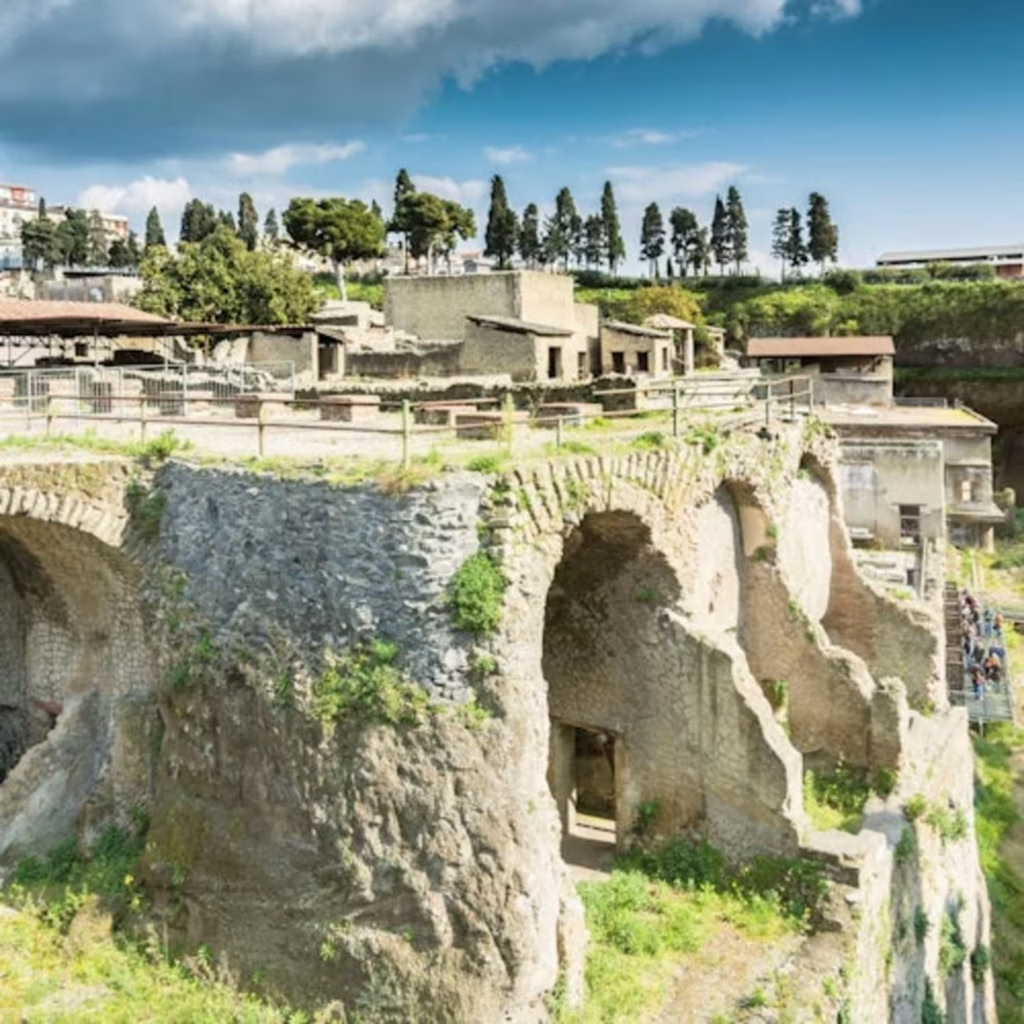
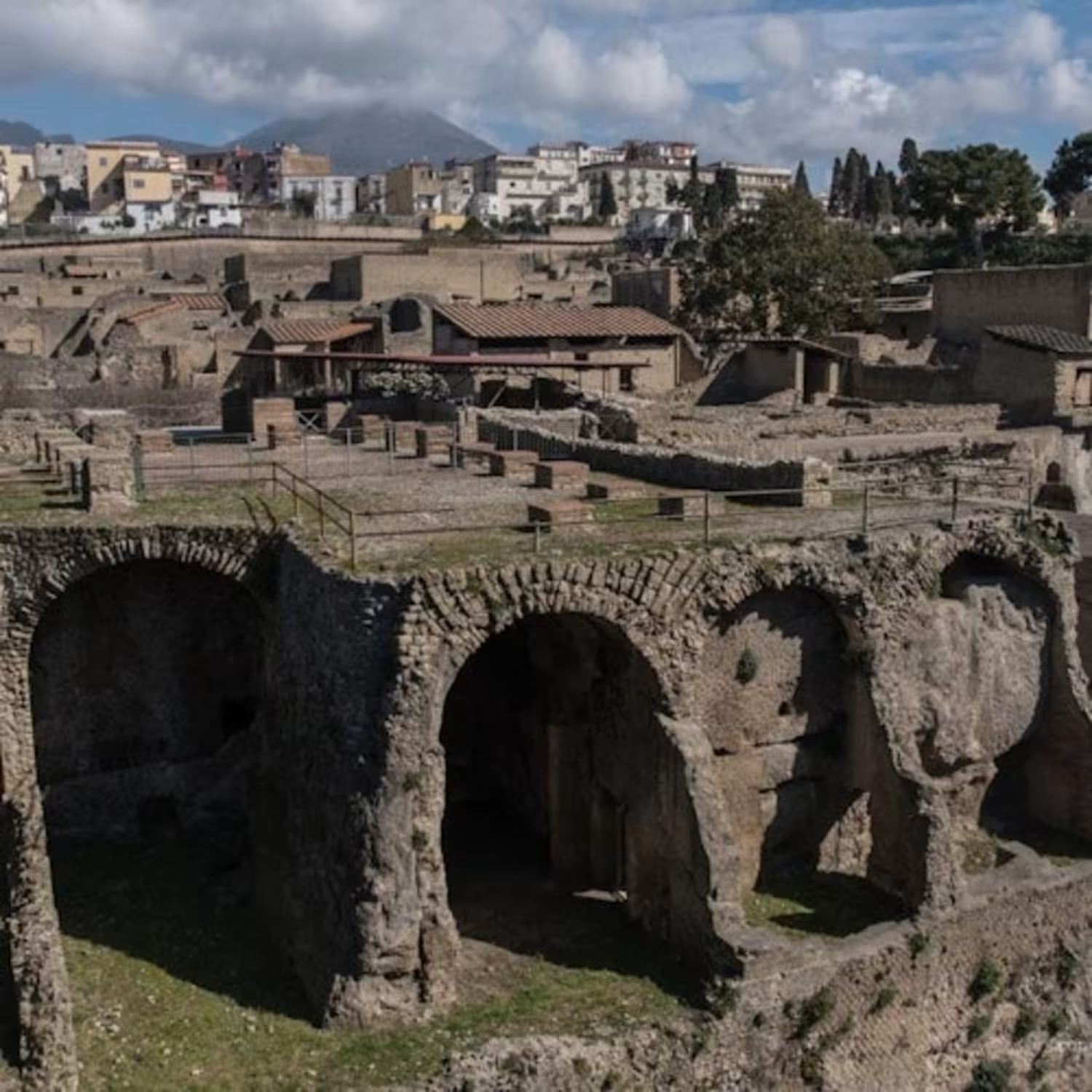
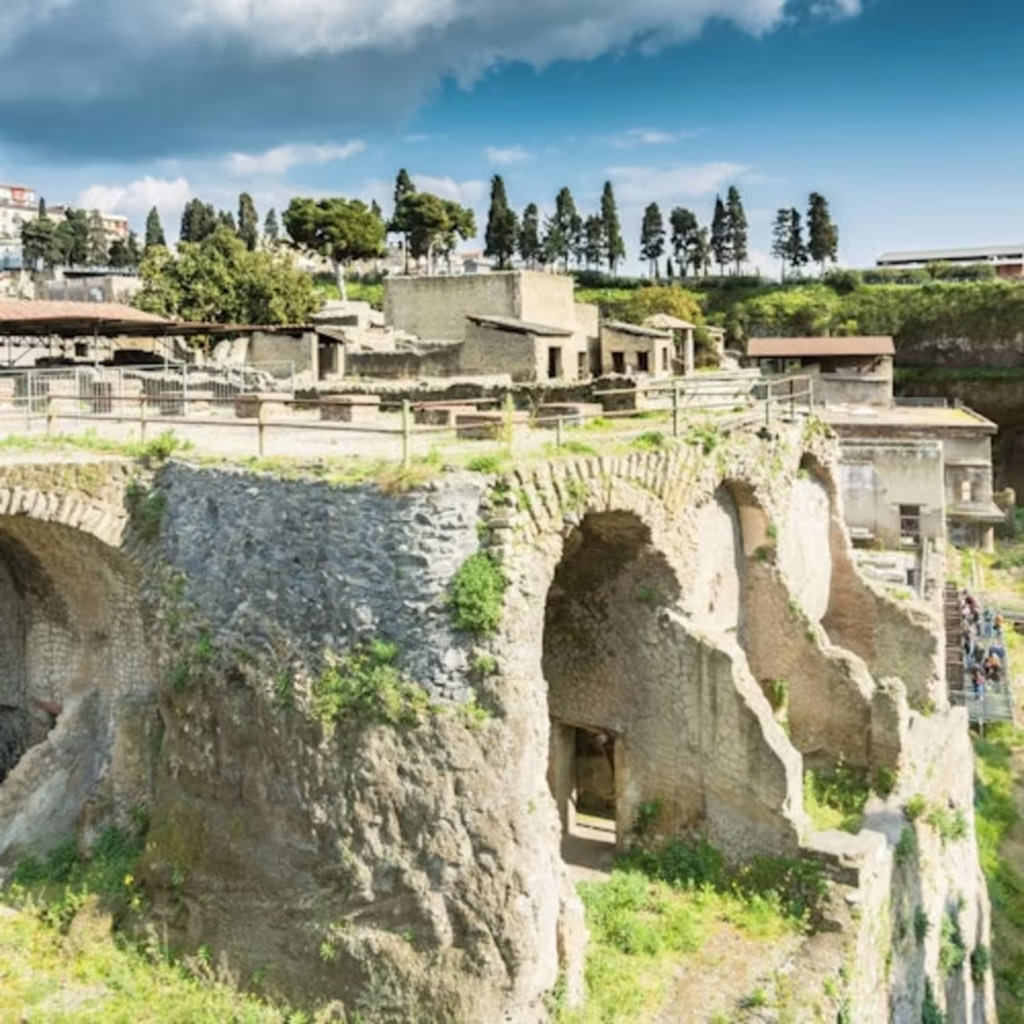
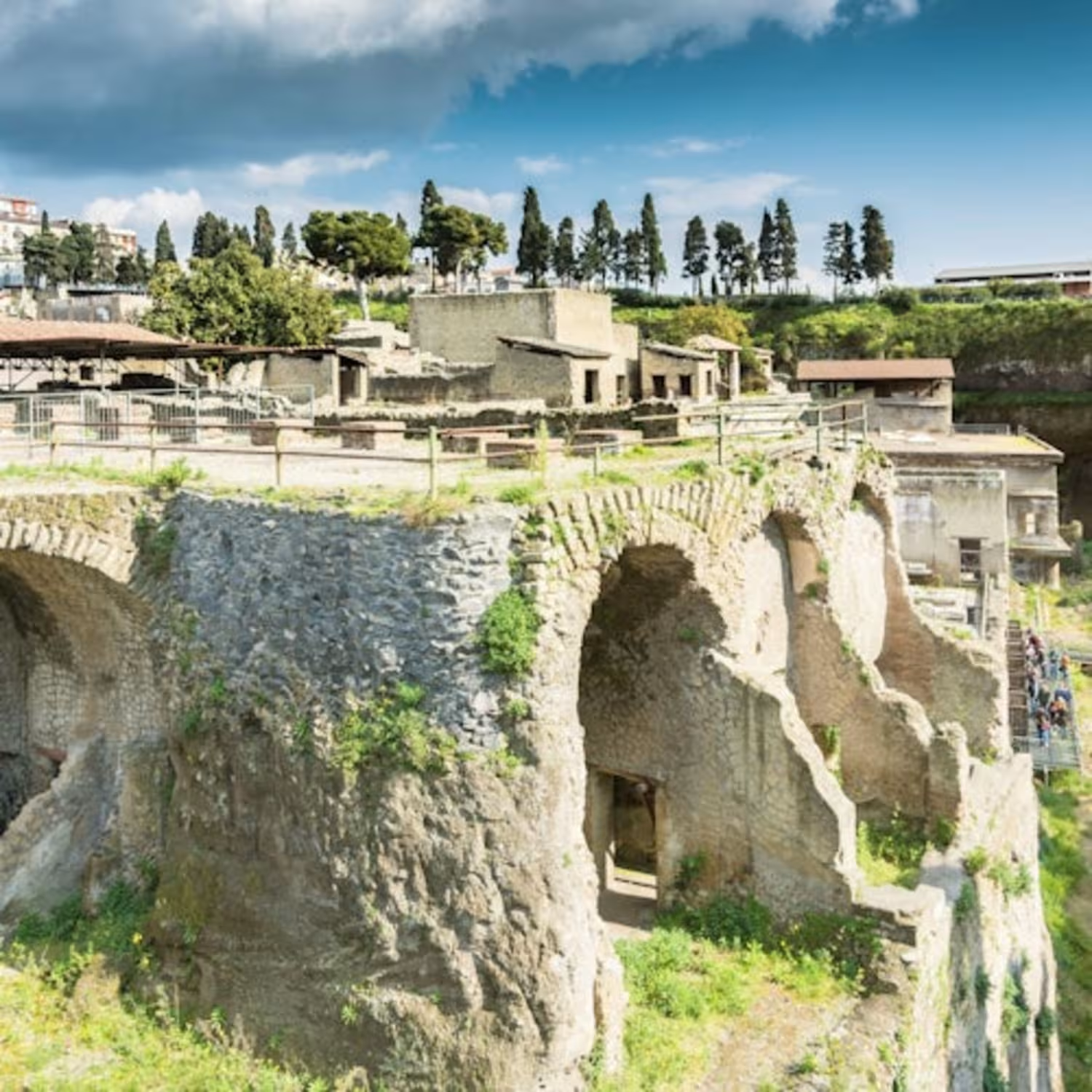
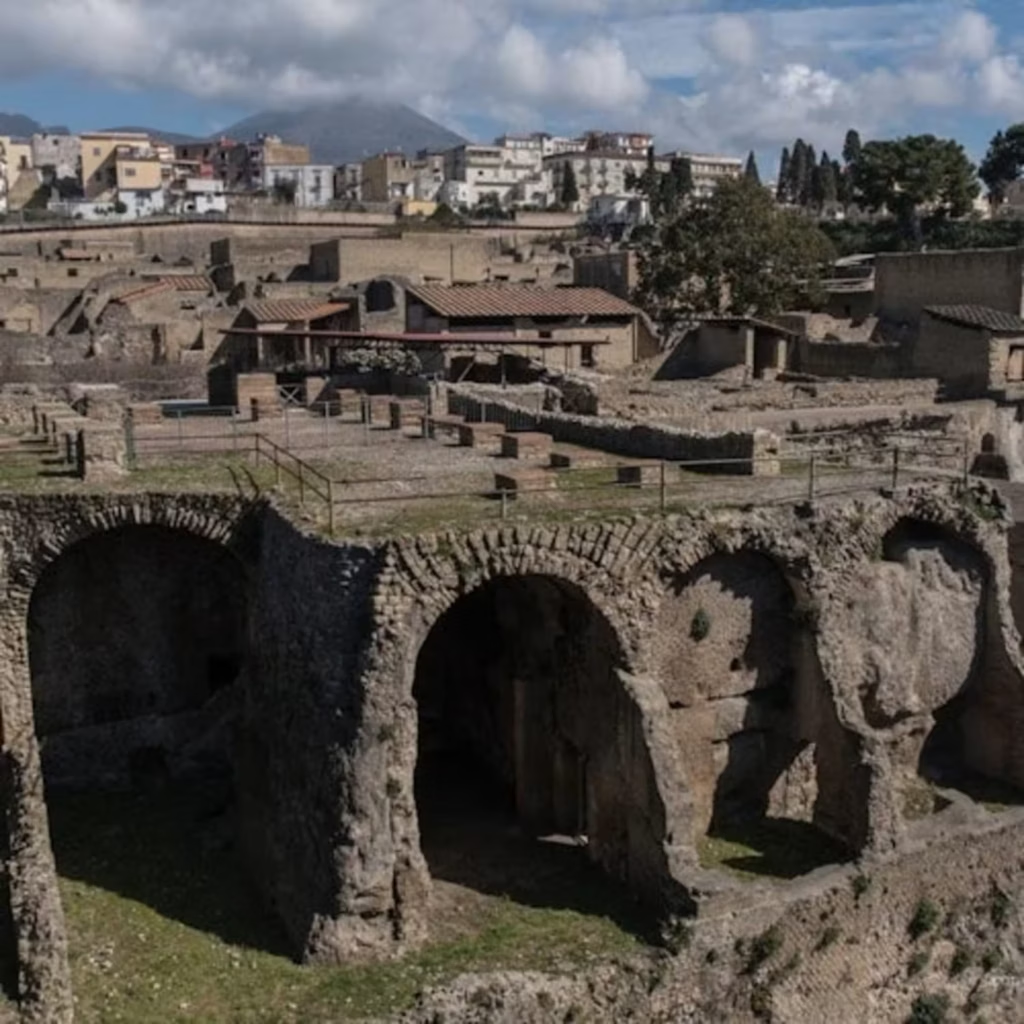
The excavation of Herculaneum from above, with the arches of the boat houses along the ancient shoreline

The Herculaneum Boat Houses: Where 300 People Waited for a Rescue That Never Came

Twelve stone vaults on the ancient beach held the townspeople who ran for the sea in AD 79. Found in 1980, they remain the most moving part of the site, and since 2024 you can walk the sand in front of them.

What the Herculaneum Boat Houses Tell Us

There are twelve vaulted chambers, known in Italian as fornici: six under the terrace of the Sacred Area and six under the Terrace of Marcus Nonius Balbus.

Around 300 skeletons were found in nine of them in 1980, and 340 individuals had been recovered from the seafront by 2012.

Before 1980 almost no bodies had been found at Herculaneum and it was assumed nearly everyone had escaped. The boat houses changed that.

The vaults were probably used as warehouses or boat shelters; the people inside were sheltering, not living there.

The dead were women and men, young and old, free and enslaved. Most of those inside the vaults were women and children; men and teenage boys lay on the beach, apparently trying to launch boats.

They carried what they could: jewellery, coins in bags and money boxes, house keys, amulets, work tools and a surgeon's set of instruments.

A wooden boat about 10 metres long was found on the beach on 3 August 1982 and is displayed in its own pavilion.

The ancient beach is several hundred metres inland today, because the surges pushed the coastline out into the bay.

The Last Hours on the Beach

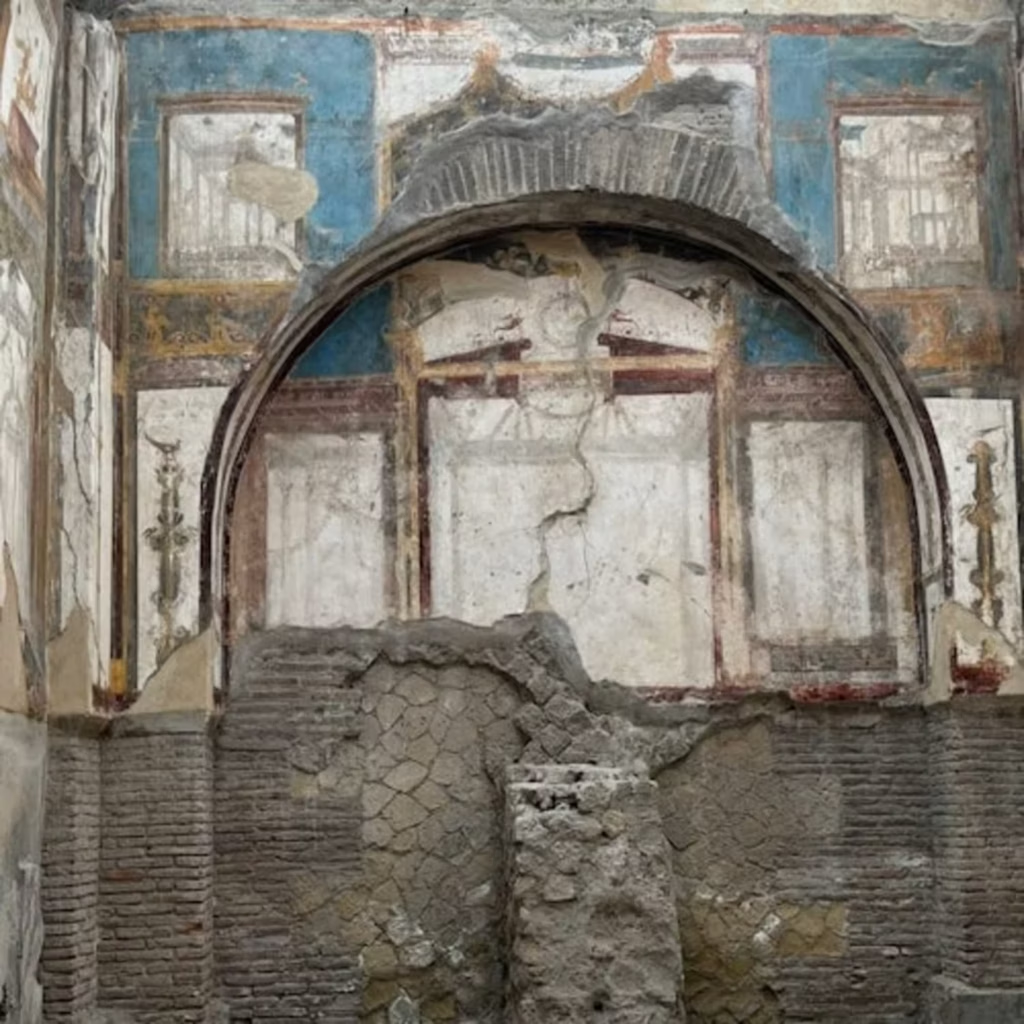
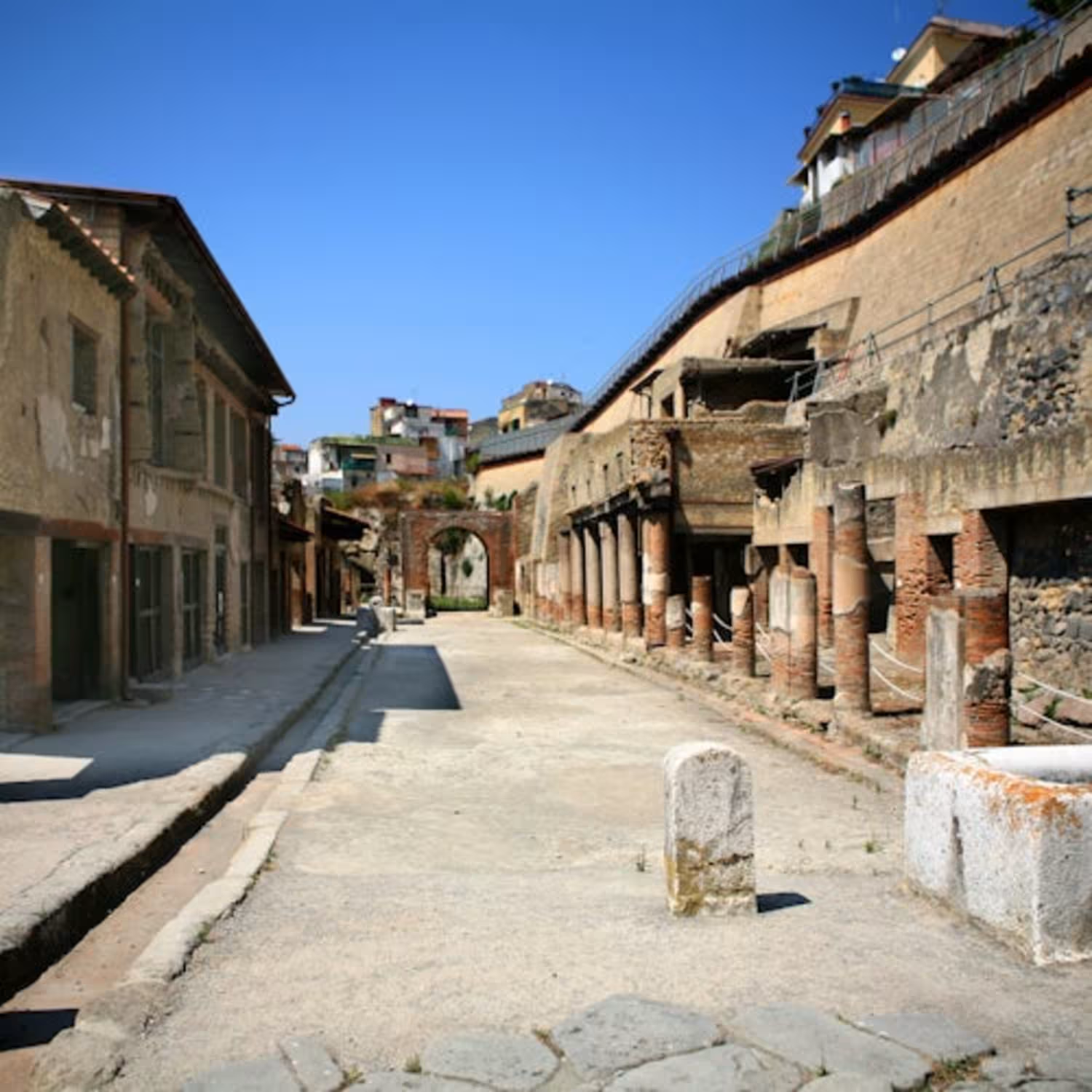
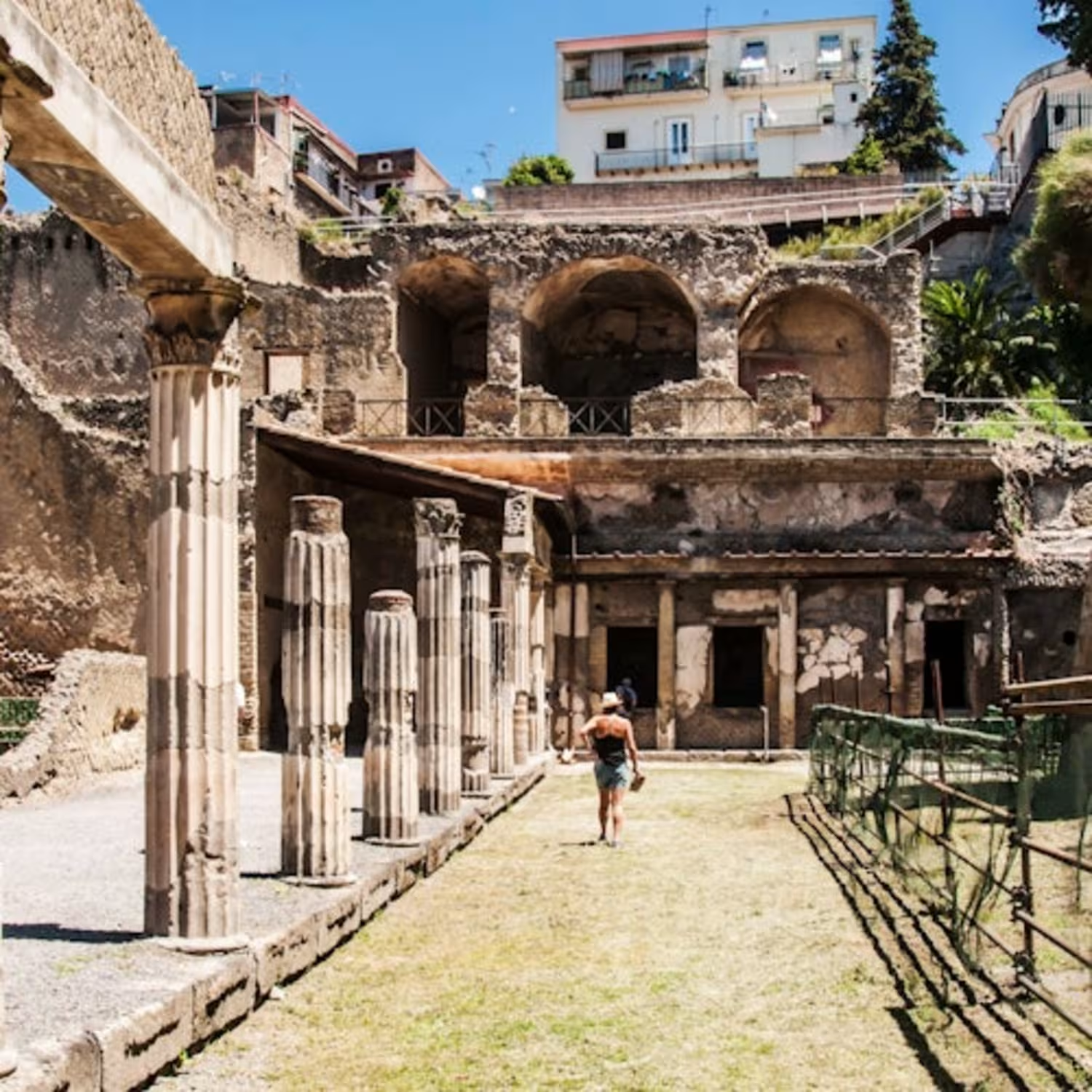
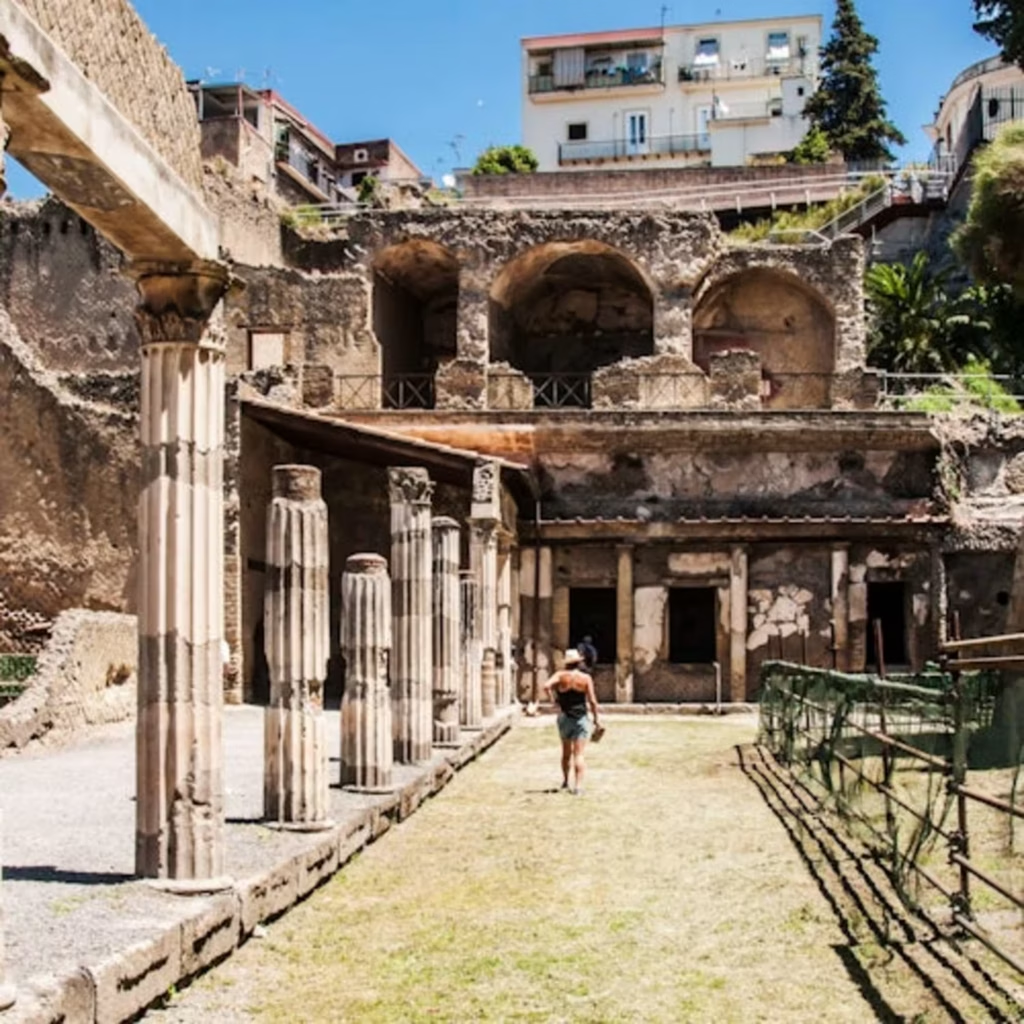
Excavated houses and arches at Herculaneum, above the level of the ancient beach

When Vesuvius erupted in the autumn of AD 79, the first phase mostly spared Herculaneum. The wind carried the ash and pumice south-east towards Pompeii, and the people of Herculaneum had hours to decide what to do. Most left, which is why the town's houses were found nearly empty of bodies. Several hundred went down to the shore instead, hoping to be taken off by boat, and crowded into the vaulted chambers that opened onto the sand beneath the town's seafront terraces.

Then the column above the volcano collapsed and the first pyroclastic surge came down the western flank. The Parco Archeologico di Ercolano gives its temperature as over 400 degrees and its speed as 10 to 20 metres per second. It reached the beach before anyone could move. A 2020 study of rib bones from 152 of the boat-house skeletons, published in the journal Antiquity, put the heat at around 440 degrees at most and concluded that the vaults acted like ovens: the people inside were not vaporised, as an earlier theory had argued, but most likely died of the heat and the toxic fumes in chambers with no air exchange.

The surges kept coming through the night, each one adding to the layer of rock that eventually sealed the beach some 25 metres below the modern town and pushed the sea hundreds of metres away. Nobody came back for the dead. The chambers stayed closed, with the bodies and everything they had carried, for just over nineteen centuries.

Nine Vaults Full of People

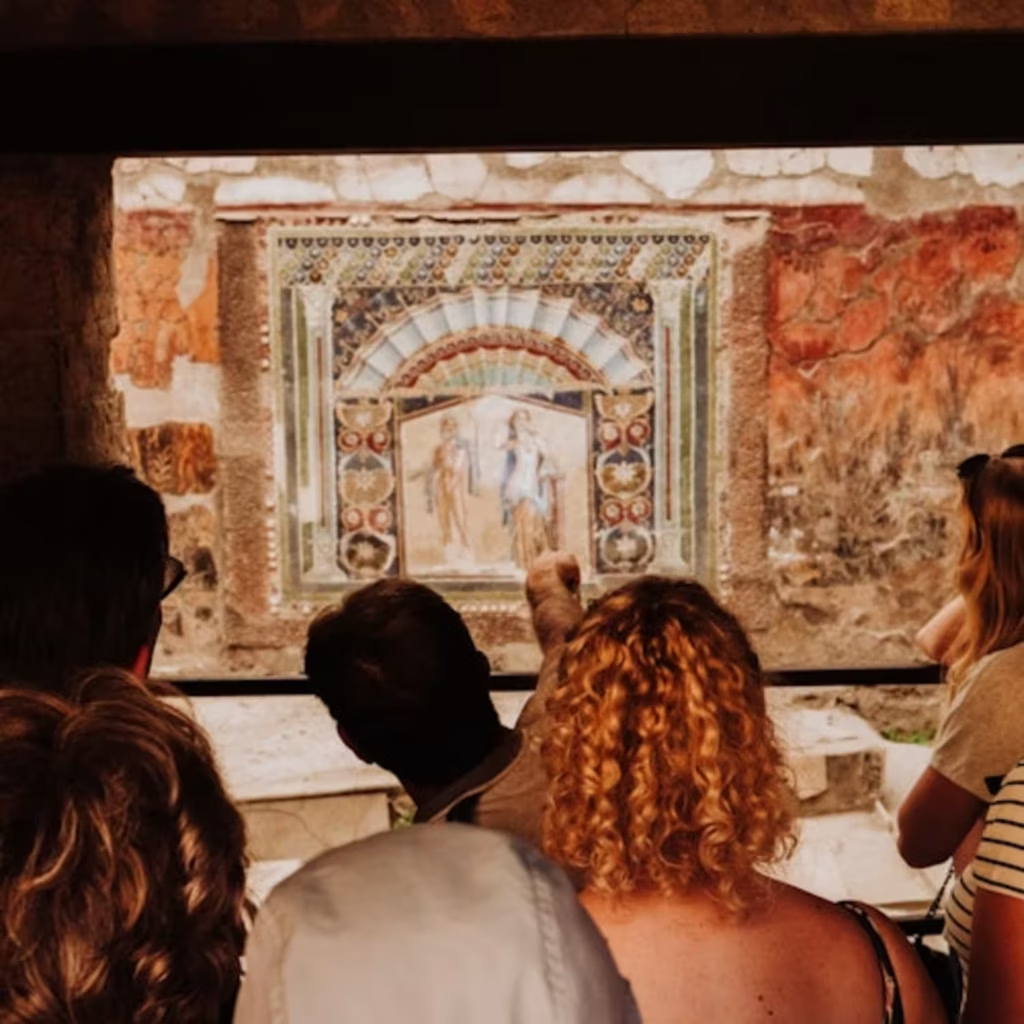
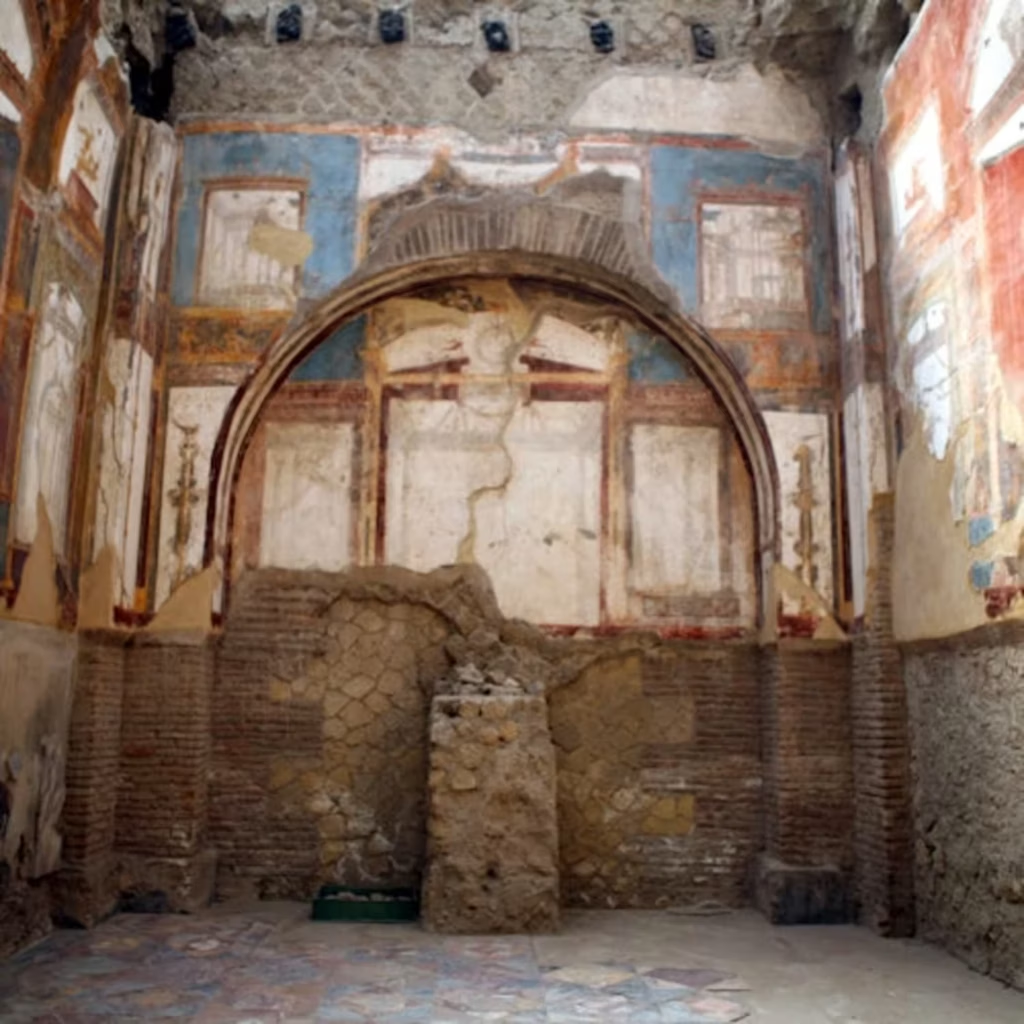
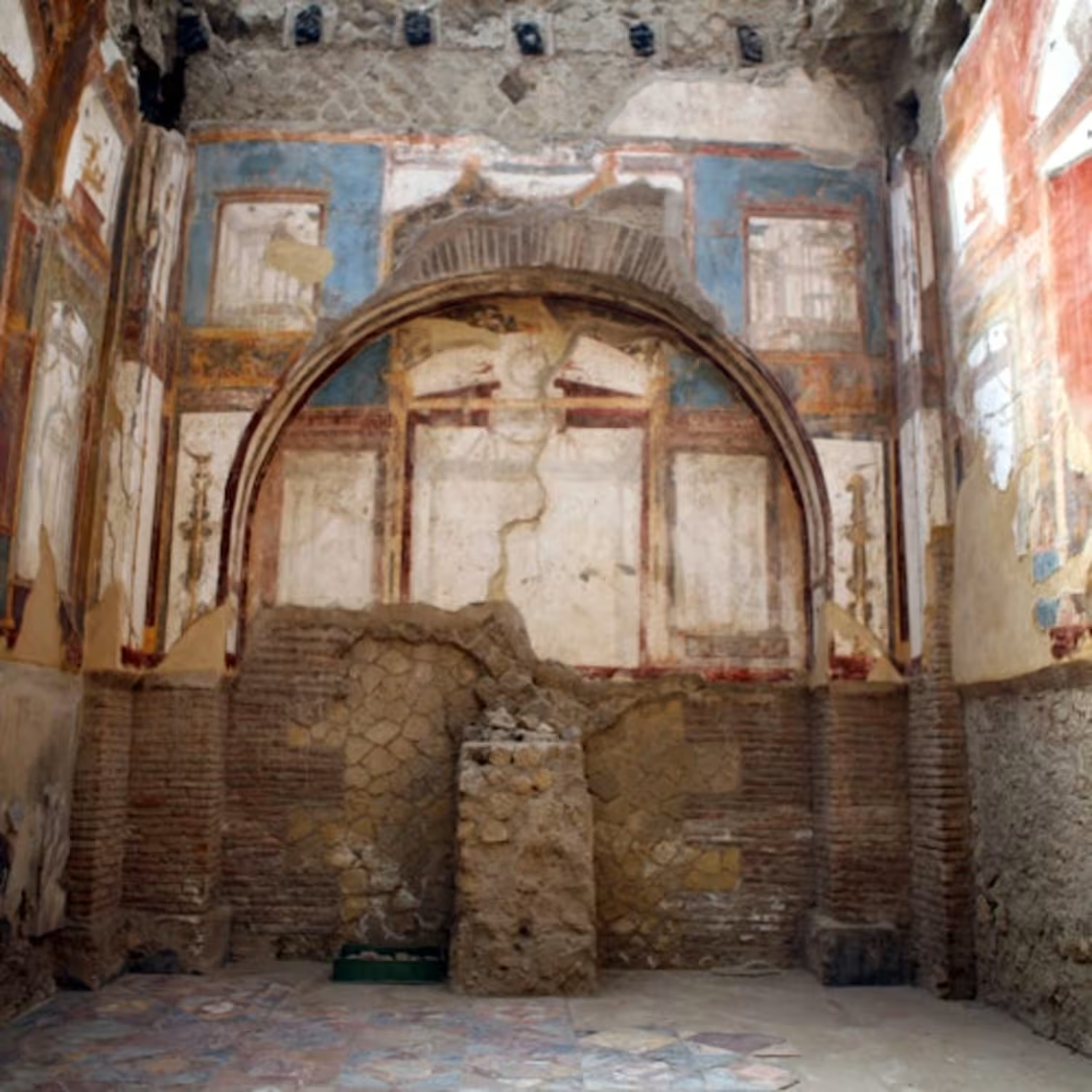
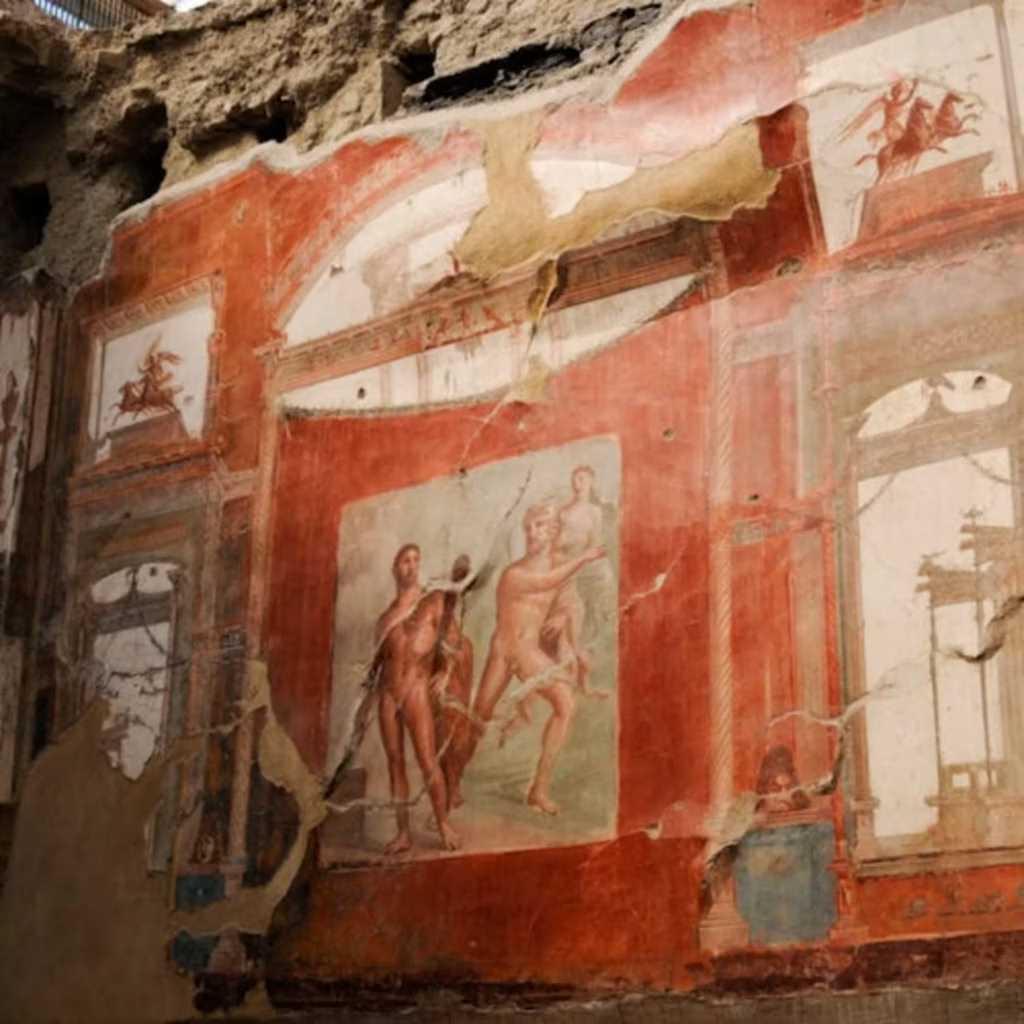
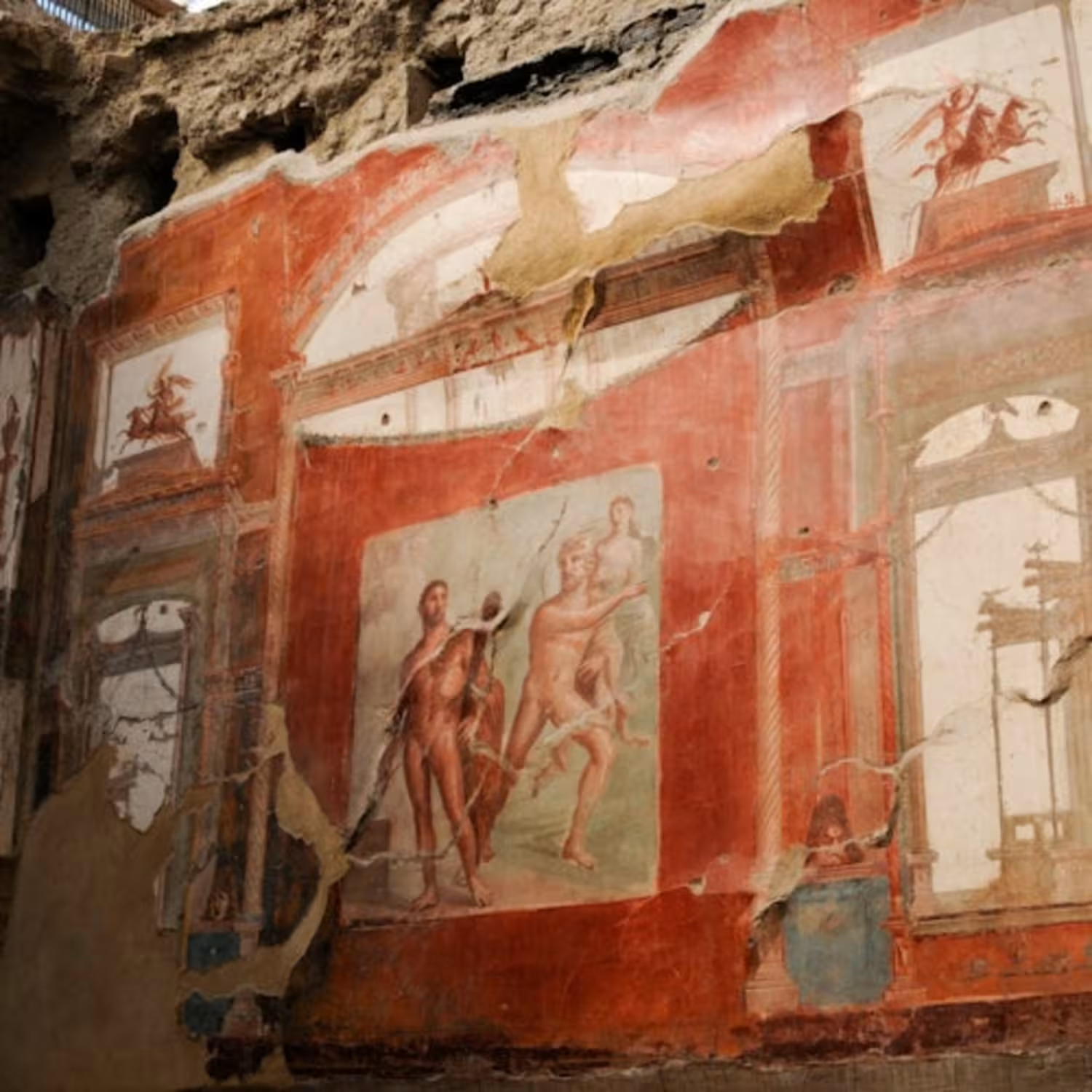
Painted shrine wall in a house at Herculaneum

Until 1980 Herculaneum was the site where everybody had got away. Excavators had found a handful of bodies in the town and nothing like Pompeii's hundreds of victims. Then work on the ancient shoreline reached the arches below the Sacred Area and skeletons began to appear in nine of the twelve chambers: around 300 people, lying where they had crouched together, often with children held between adults.

The find mattered scientifically as much as emotionally. Romans cremated their dead, so Roman skeletons are rare; here was a whole community that had lived in the same place and died at the same moment, which the park calls an anthropological sample of major importance. The bones have been used to study diet, disease, work and growth in a Roman town, and the objects beside them, from a surgeon's set to house keys, say a great deal about what people thought they would need afterwards.

Two individual finds stand out. A skeleton found in the 1980s near the remains of the boat, with a belt and weapons, is now read as a senior Roman soldier on a rescue mission, which supports the account of a naval relief effort from across the bay. And in 2021 excavators found the remains of a man of about 40 to 45 on the shoreline, nicknamed the last fugitive, caught in the open as the surge arrived.

4.6
(35)

Herculaneum: Entrance Ticket

Highlights

Discover a remarkably conserved Roman town frozen in time by volcanic eruption.

Enjoy easy entry with fast-track access.

Immerse yourself with a downloadable audio guide available in multiple languages.

Stroll through breathtaking mosaics, frescoes, and ancient architecture.

Visit at flexible hours with admission until an hour and a half before closing.
4.7
(15)

Herculaneum: Guided Tour + Round-trip Journey from Naples

Highlights

Experience an expert-led tour through a remarkably preserved archaeological site.

Visit key historic locations such as the House of the Deer and the Forum baths.

Benefit from roundtrip transport between Naples and Herculaneum.

Enjoy a comprehensive exploration lasting around three hours.

Available live guides speak English, Italian, and Spanish.
Walk the Beach at the End of Your Visit

Leave the boat houses for last. The Herculaneum: Entrance Ticket reserves a time slot for the whole site, and the shoreline is the natural end point after the houses and baths above it: you walk down the ramp, cross the sand and stand in front of the vaults. If you would rather have the story told as you go, the Herculaneum Guided Tour + Round Trip Journey from Naples includes the train from the city and a guide who covers the eruption, the rescue attempt and the 1980 discovery. The beach can close for maintenance or bad weather, so check before you go. For the rest of the site, see our Herculaneum vs Pompeii guide and the story of the Villa of the Papyri.

About this guide

Sources: Parco Archeologico di Ercolano, The escapees; Parco Archeologico di Ercolano, The Martusciello Gallery reopens the doors of the Antica Spiaggia; Parco Archeologico di Ercolano, Organic finds; Live Science, Vesuvius victims in Herculaneum boathouses (Antiquity study); NPR, Herculaneum beach reopens after restoration; Pompeii in Pictures, Herculaneum boatsheds and shoreline.

Frequently Asked Questions About the Herculaneum Boat Houses

What are the Herculaneum boat houses?

Twelve vaulted stone chambers, called fornici, that open onto the ancient beach below the town's seafront terraces. They were probably warehouses or shelters for boats, and in AD 79 hundreds of people hid in them from the eruption.

How many skeletons were found in the Herculaneum boat houses?

Around 300 in 1980, in nine of the twelve chambers. By the time excavation of the seafront ended in 2012, 340 individuals had been recovered from the beach and the vaults together.

How did the people in the boat houses die?

A 2020 study in the journal Antiquity concluded that the pyroclastic surge, at up to about 440 degrees, turned the vaults into ovens and that the victims most likely died of heat and toxic fumes rather than being vaporised instantly.

Can you see the skeletons at Herculaneum?

Yes. The original bones were removed for study, but resin casts lie in the chambers in the positions the bodies were found, and you view them from the ancient beach in front of the arches.

Is the ancient beach at Herculaneum open?

Yes. It reopened in June 2024 after a long restoration, and the Martusciello Gallery ramp that leads down to it reopened in July 2026. Access can be suspended for maintenance or weather, so check before you go.

Why were there so few bodies at Herculaneum before 1980?

Because most of the town had fled during the first hours of the eruption, when the ash was falling on Pompeii instead. Those who stayed went to the shore hoping for rescue by sea, which is why the victims were concentrated on the beach rather than in the houses.

What was found with the victims in the boat houses?

Jewellery, bags and baskets of coins, money boxes, house keys, amulets and work tools including a surgeon's set of instruments. One skeleton found near the boat, with a belt and weapons, is thought to be a Roman soldier.

Where was the sea when the boat houses were in use?

Right in front of them. The vaults opened directly onto the beach. The surges of AD 79 filled the bay with rock, so the ancient shoreline is now several hundred metres inland from the modern coast.