We are processing your request.
Please, don’t close or refresh the page.
Naples Tickets Jago Museum Jago Sculptor
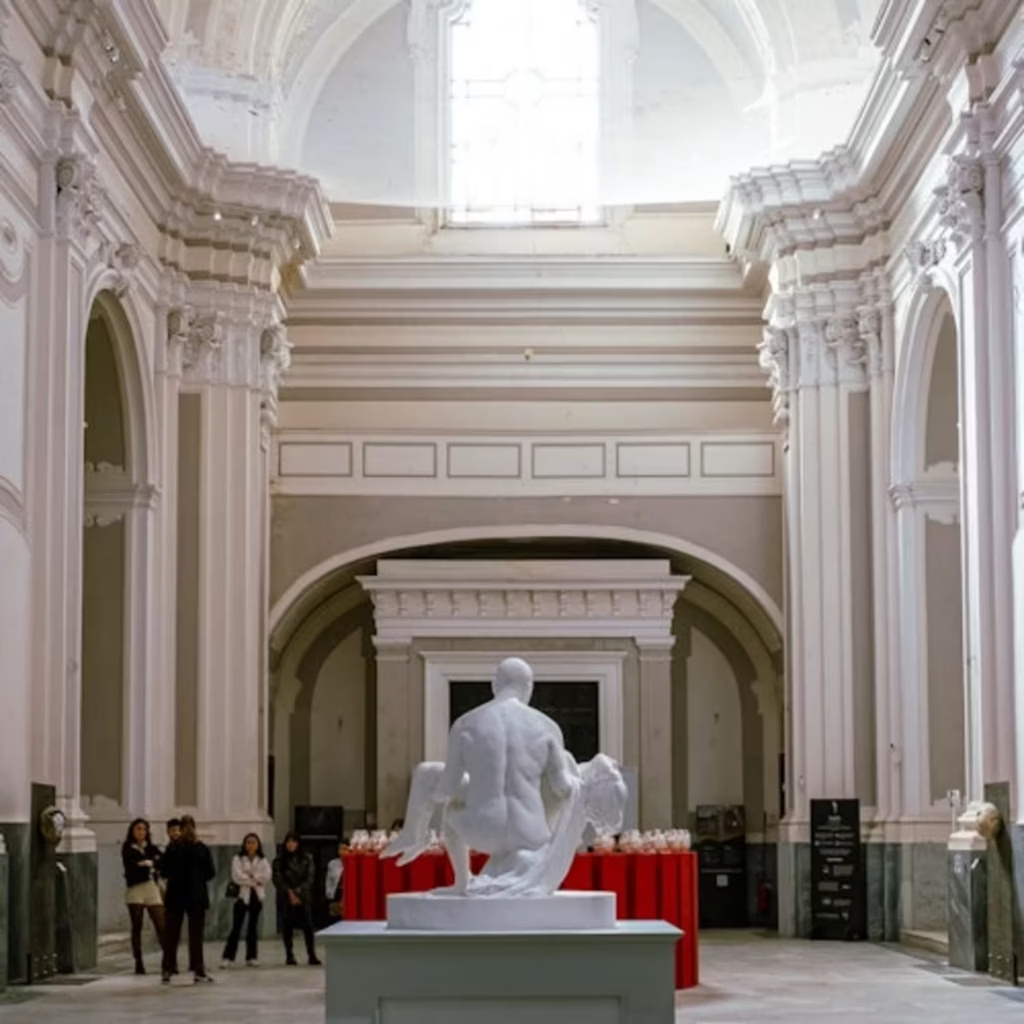
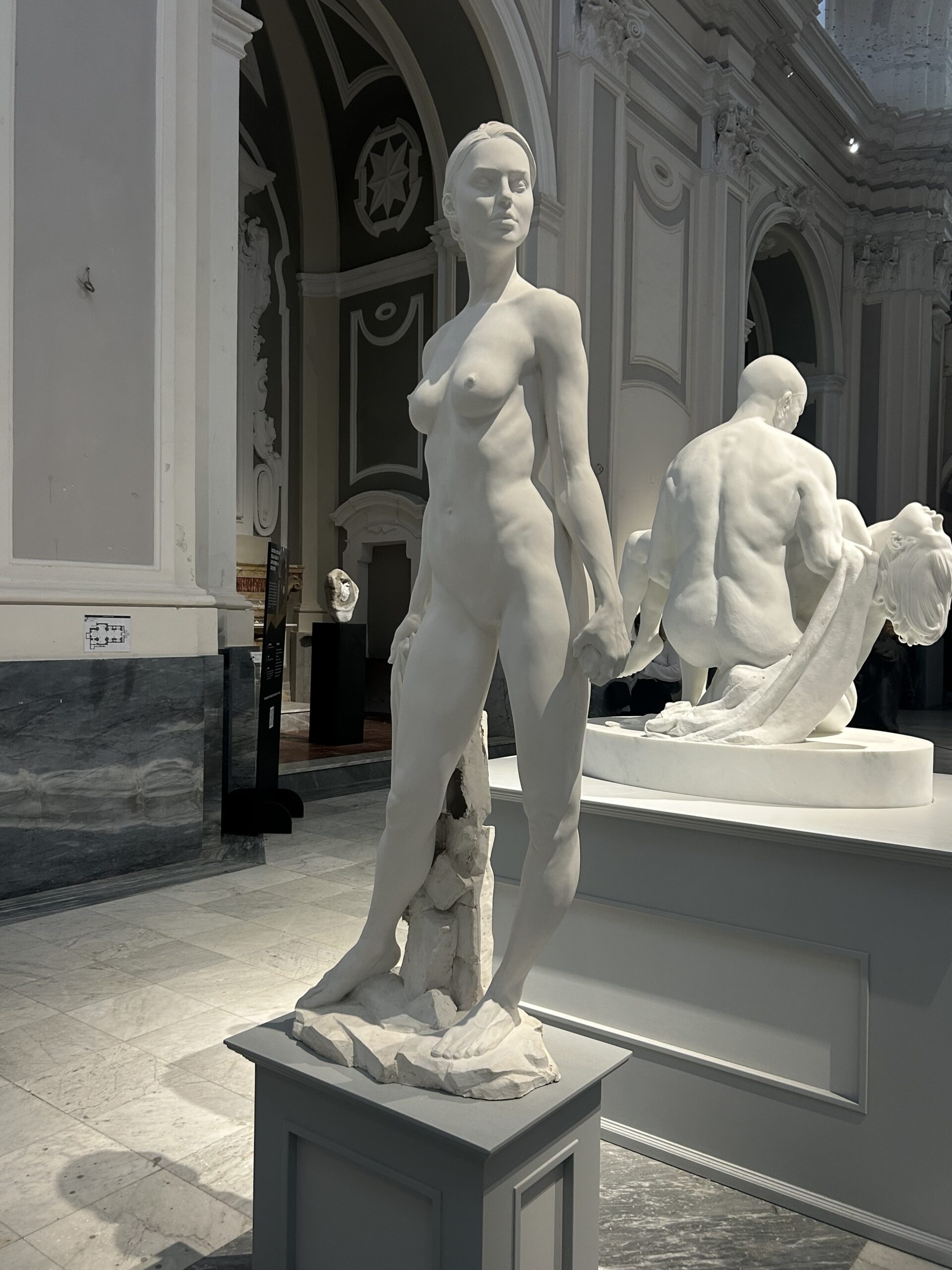
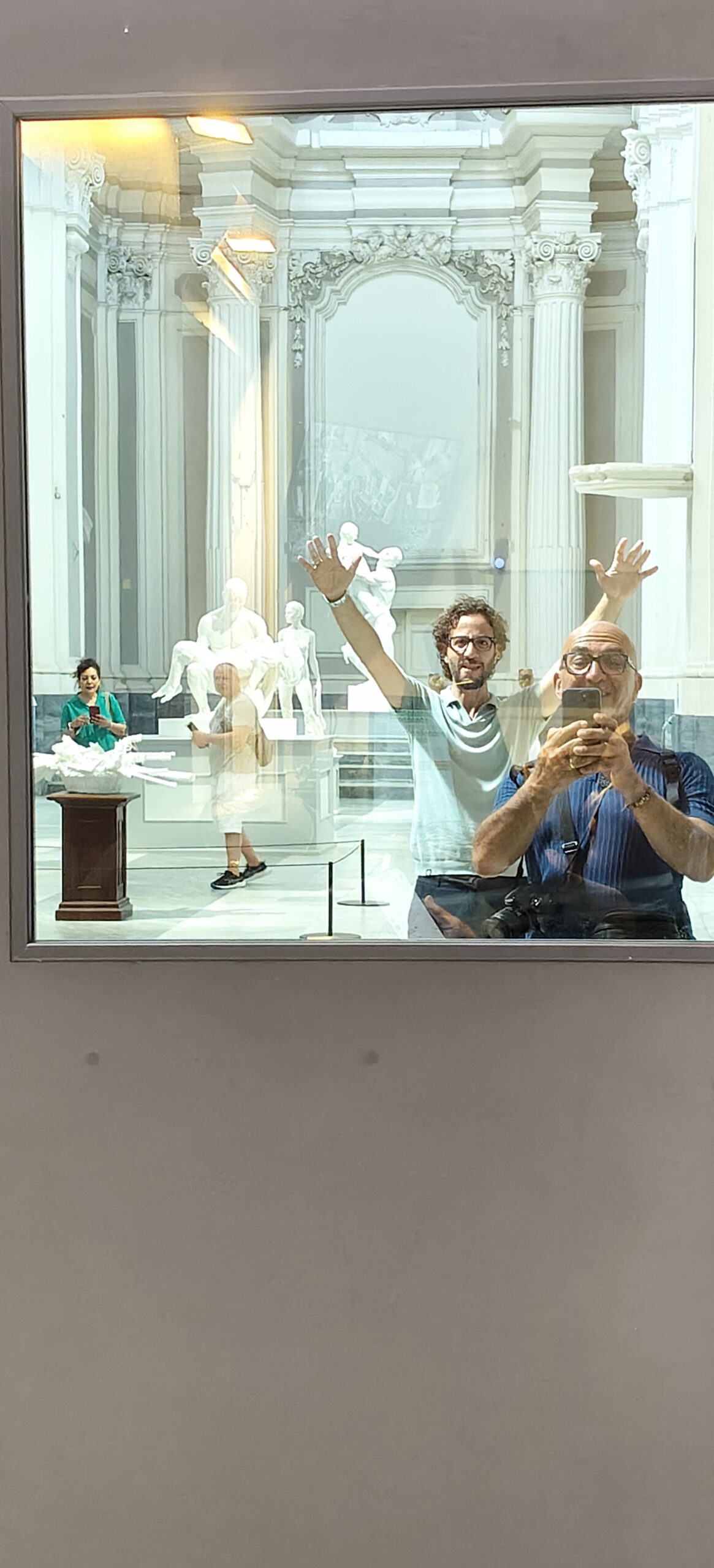
Marble sculpture by Jago displayed in the nave of the church of Sant'Aspreno ai Crociferi, Naples

Jago the Sculptor: From a Marble Pope to a Museum in a Neapolitan Church

Jacopo Cardillo carved a bust of Benedict XVI at 22, undressed it when the Pope resigned, and became the most followed sculptor in Italy by filming every chisel stroke. His studio in Rione Sanità is now a museum.

What Makes Jago Different From Other Sculptors

He was born Jacopo Cardillo in 1987 in Frosinone, grew up in Anagni with a small studio on the cathedral square, and left art school in 2010 without finishing.

At 24 he was picked by Vittorio Sgarbi for the 54th Venice Biennale (2011) with a marble bust of Benedict XVI carved in 2009, which also earned him a Pontifical Medal.

When the Pope abdicated, Jago reworked the bust, stripping the robes to a bare torso, and retitled it Habemus Hominem in 2016.

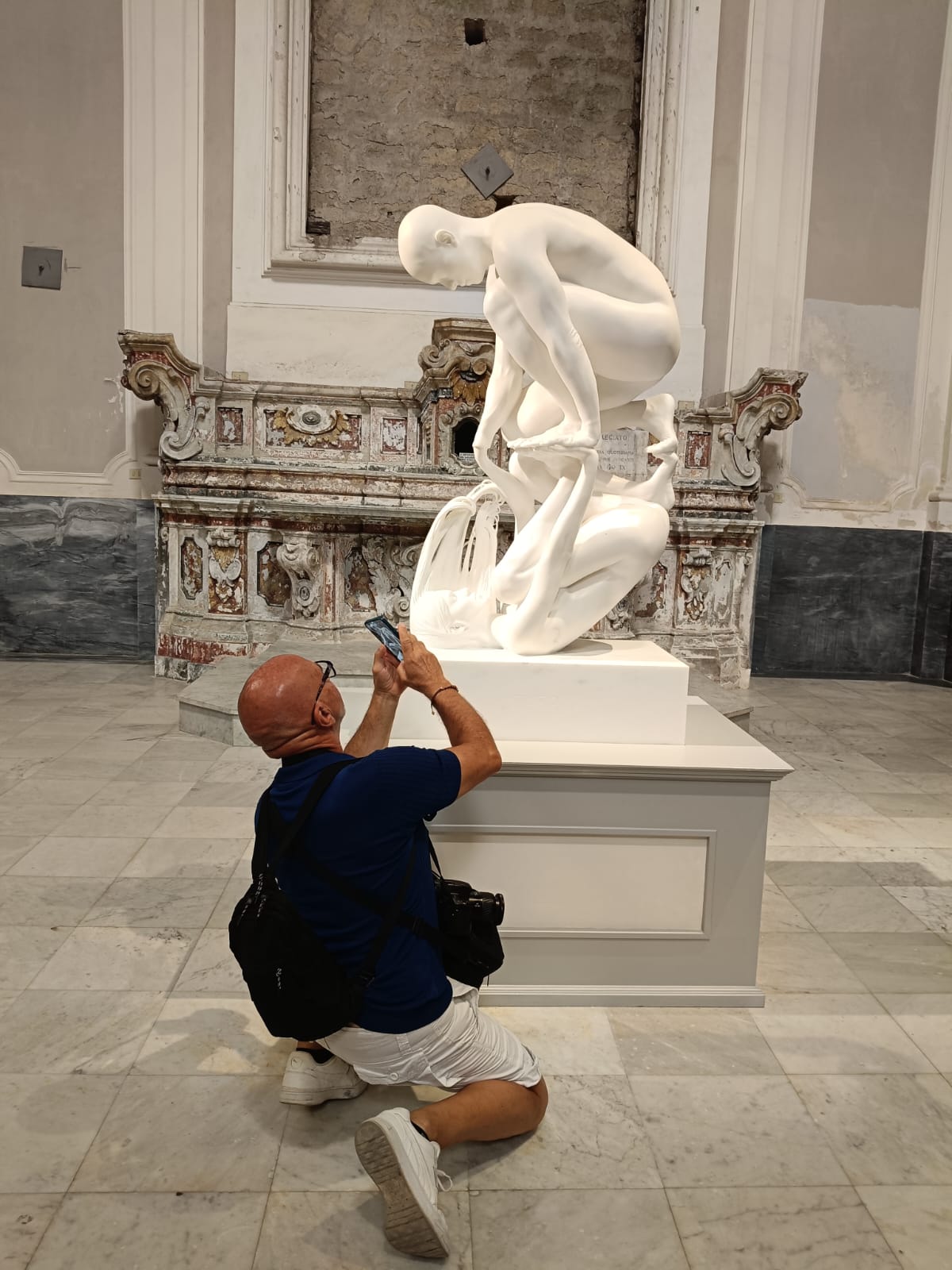
The Veiled Son (2019) was carved in New York from Vermont Danby marble and is on permanent display in the Cappella dei Bianchi at San Severo fuori le mura, a short walk from the museum.

Look Down, a chained infant in marble, appeared overnight in Piazza del Plebiscito in November 2020, stayed six months and now sits in the desert of Fujairah as Look Here.

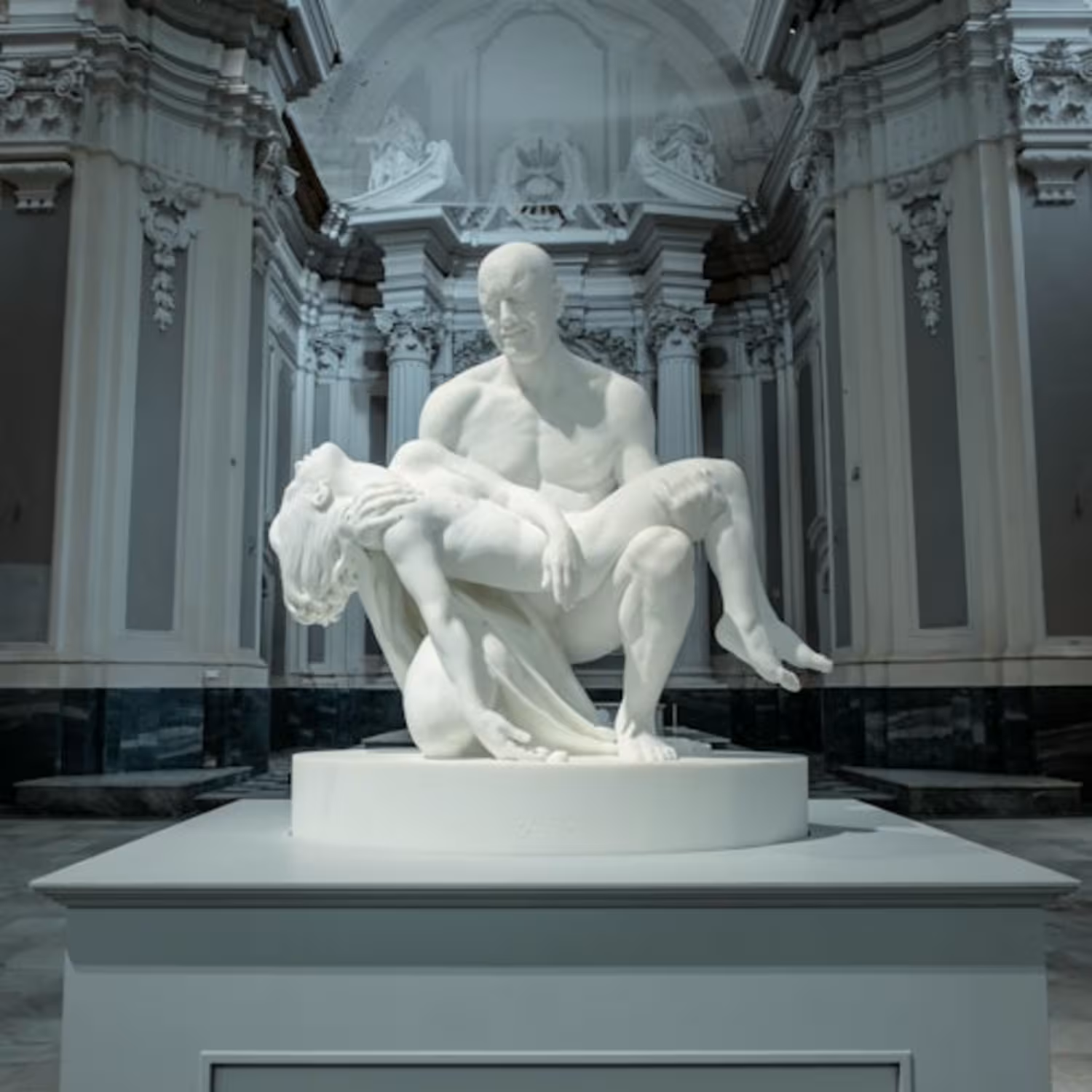
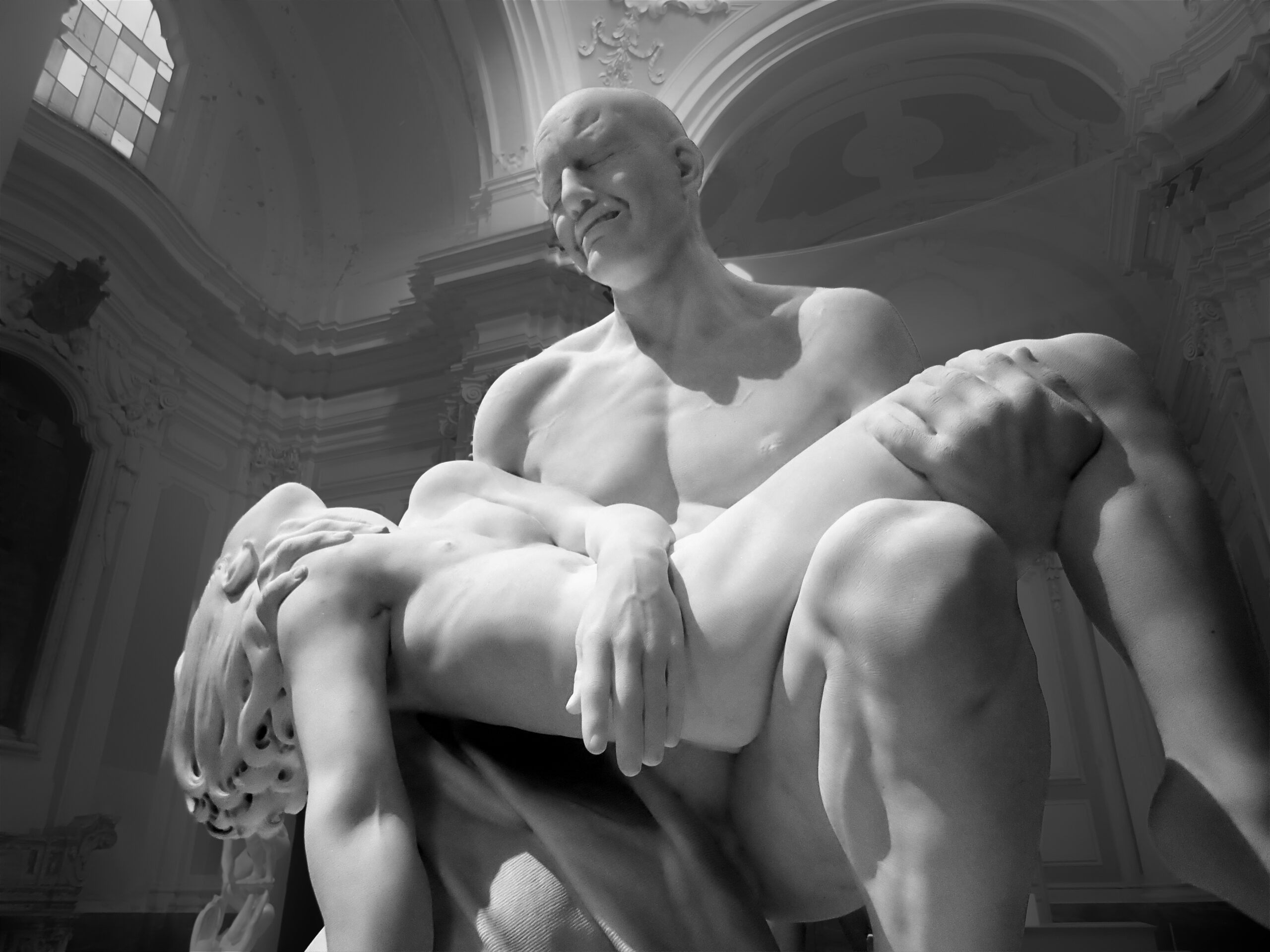
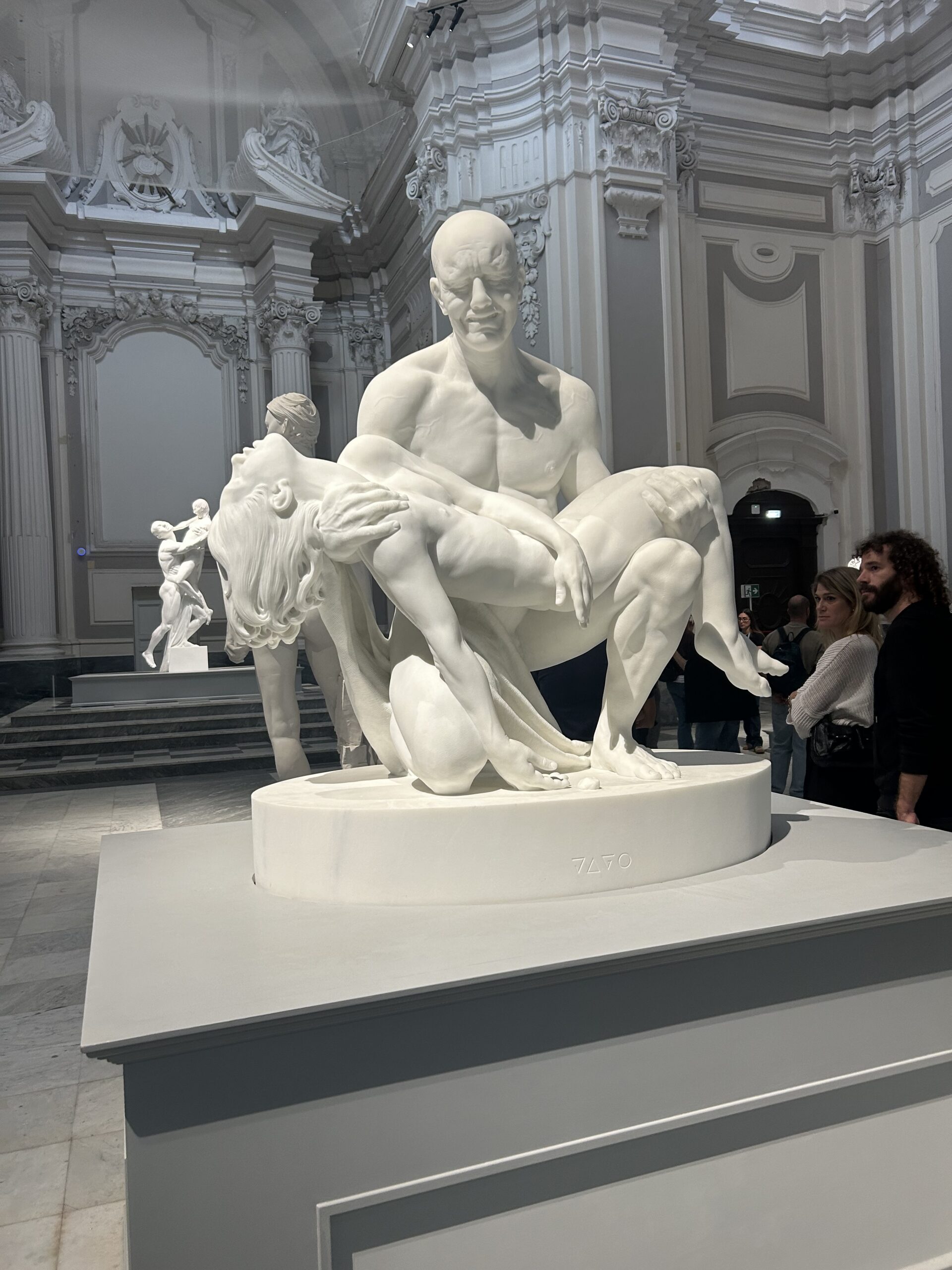
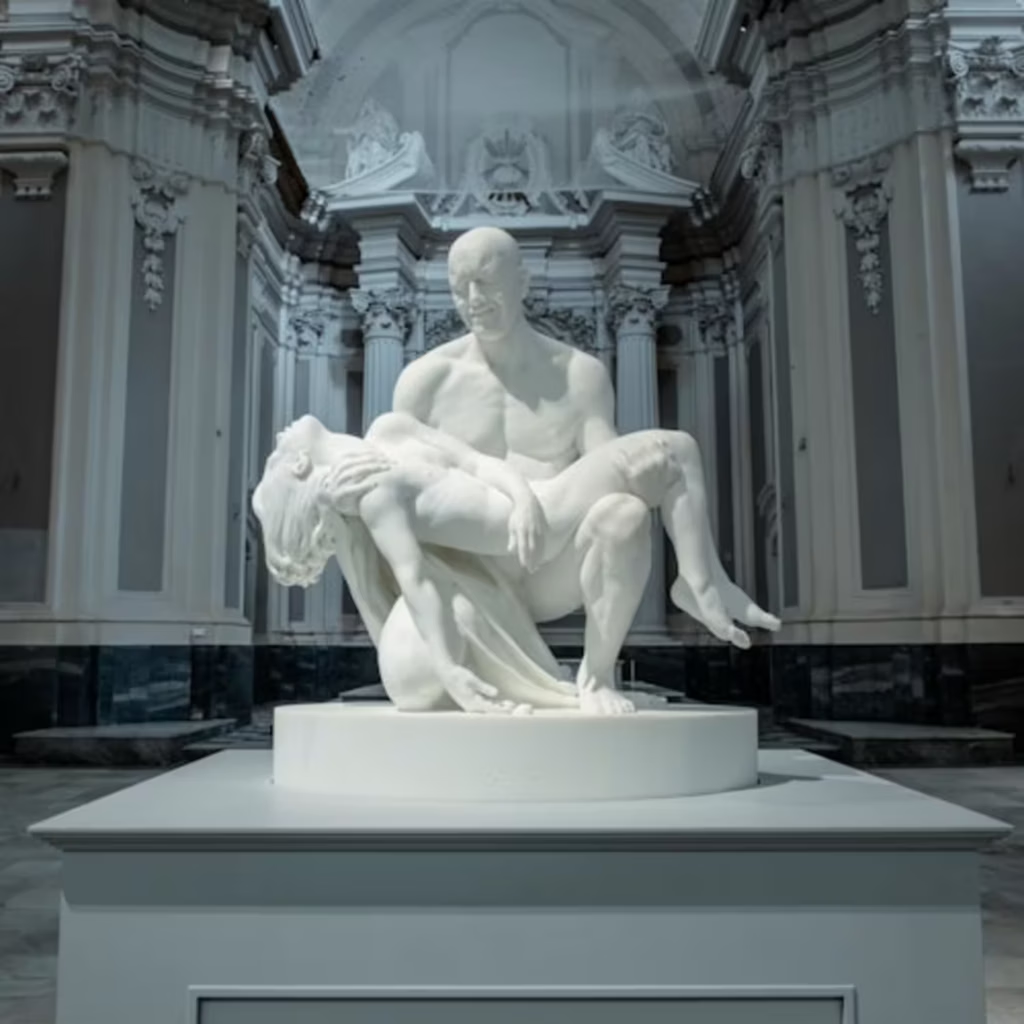
His Pietà (2021) took 16 months in the church of Sant'Aspreno ai Crociferi and was shown in the Church of the Artists in Rome; the Virgin wears his own face.

First Baby, a small marble sculpture, went to the International Space Station in 2019 on ESA's Beyond mission and came home with Luca Parmitano in February 2020.

He shares every stage of the work on video. By late 2022 he had almost 800,000 followers on Instagram, and his bronze David began a world tour aboard the Amerigo Vespucci in 2024.

A Bust of the Pope, and Then a Man

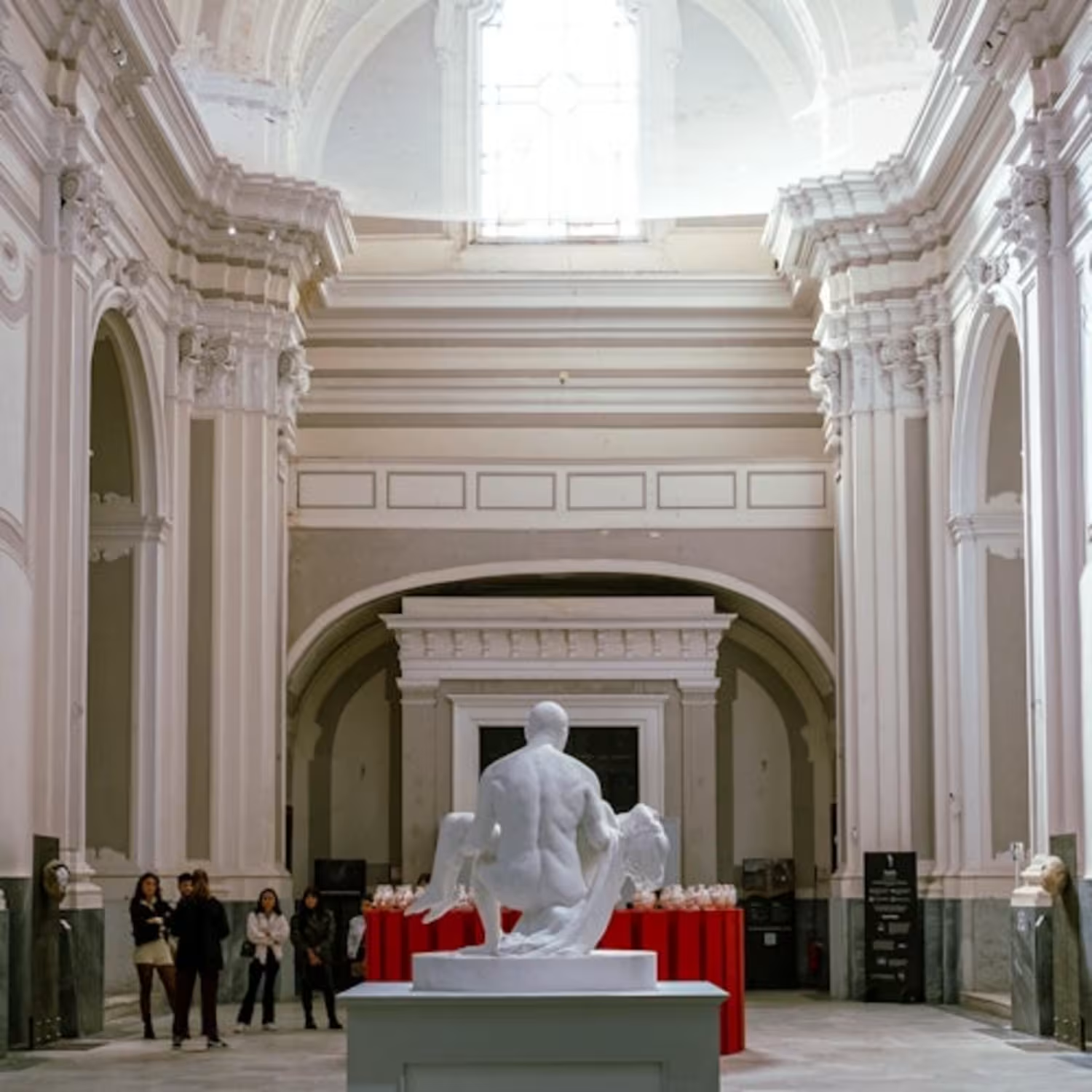
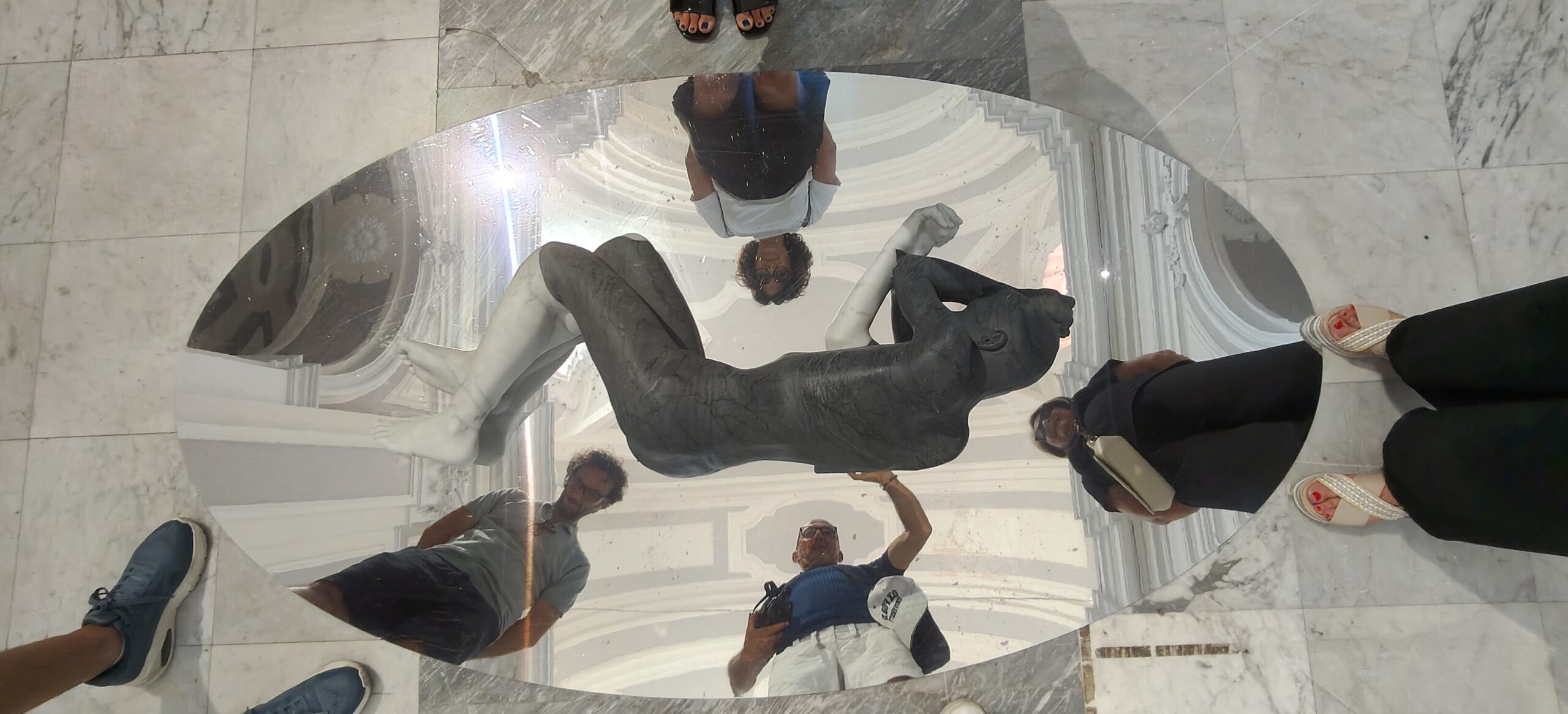
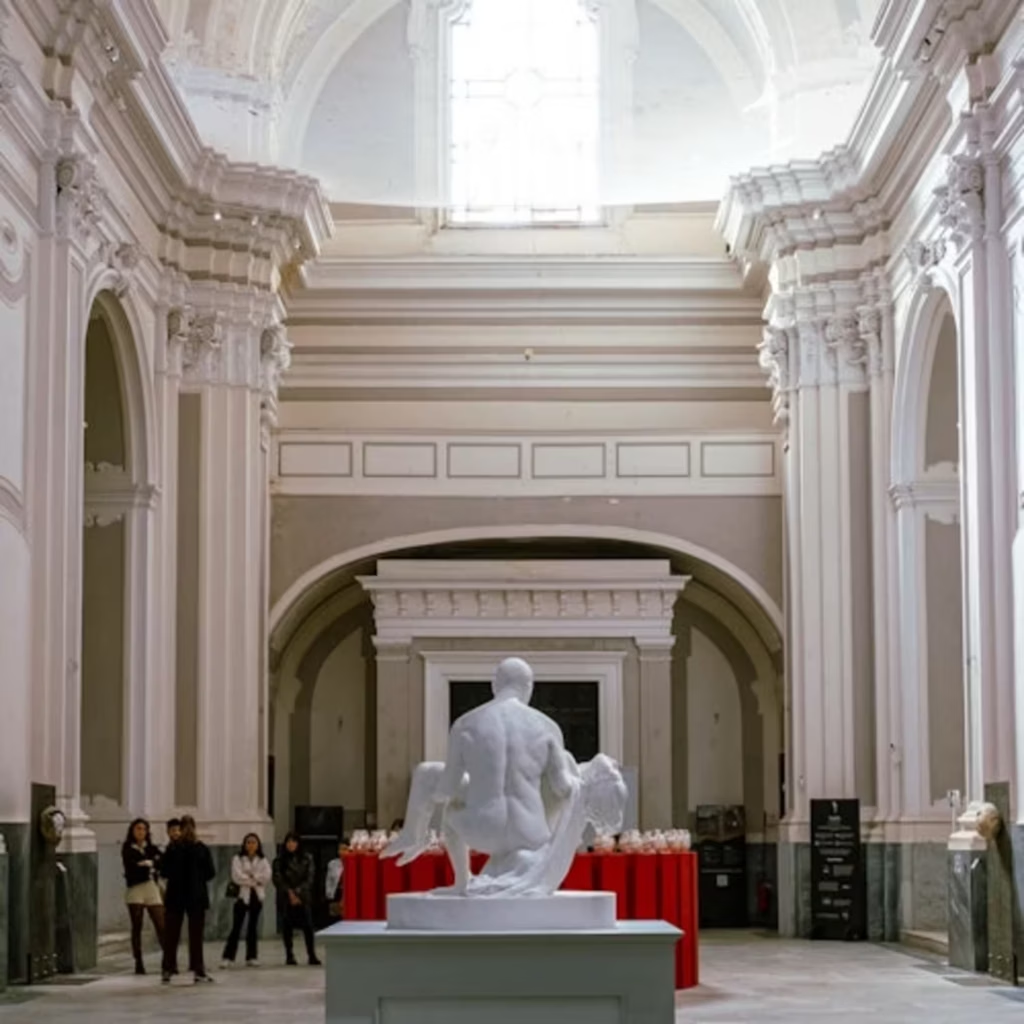
Marble sculpture by Jago in the nave of the Jago Museum, Naples

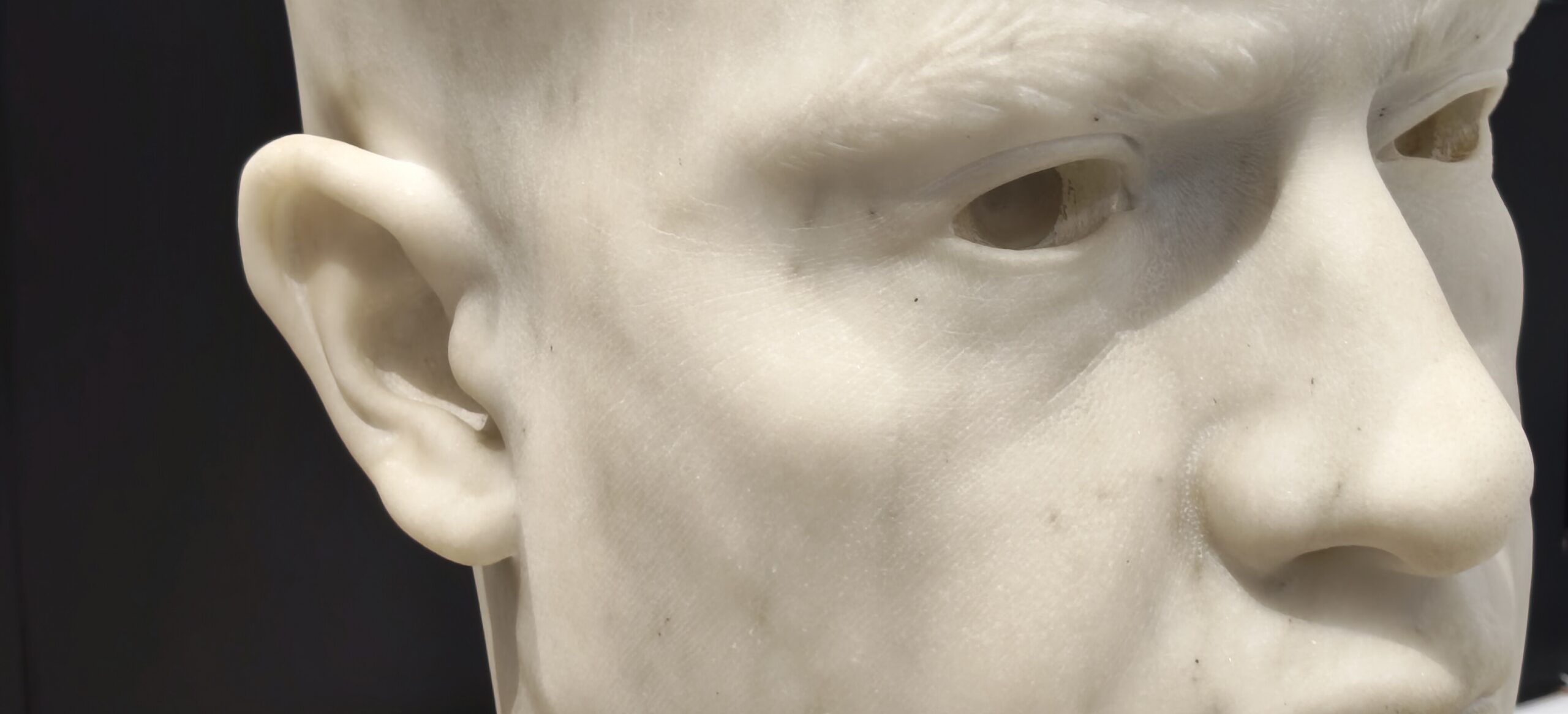
Jago's career starts with one object. In 2009, at 22, he carved a marble bust of Benedict XVI: robes, mozzetta, the heavy face. Two years later the critic Vittorio Sgarbi selected it for the 54th Venice Biennale, and the Vatican awarded the young sculptor a Pontifical Medal. For an art-school dropout from Frosinone it was an improbable debut.

Then Benedict resigned. Jago went back to the finished bust and carved the papal clothing away, leaving an old man's bare chest and shoulders under the same face. He called the result Habemus Hominem, we have a man, and showed it at his first solo exhibition in Rome in 2016; when it travelled to the Museo Carlo Bilotti in 2018 more than 3,500 people came to the opening. The piece set the pattern for everything since: a recognisable figure, traditional technique, a twist that turns it into a question about power and fragility.

Between 2016 and 2018 he worked between Italy, China and the United States, lived in Manhattan with a workshop on Long Island, and taught a masterclass as visiting professor at the New York Academy of Art. In 2019 a tiny marble foetus, First Baby, flew to the International Space Station with the European Space Agency and returned the following February in the care of astronaut Luca Parmitano. The same year a far larger child, the Veiled Son, came back from New York to Naples, and the city has been his base since May 2020.

Marble, a Camera and a Baroque Church

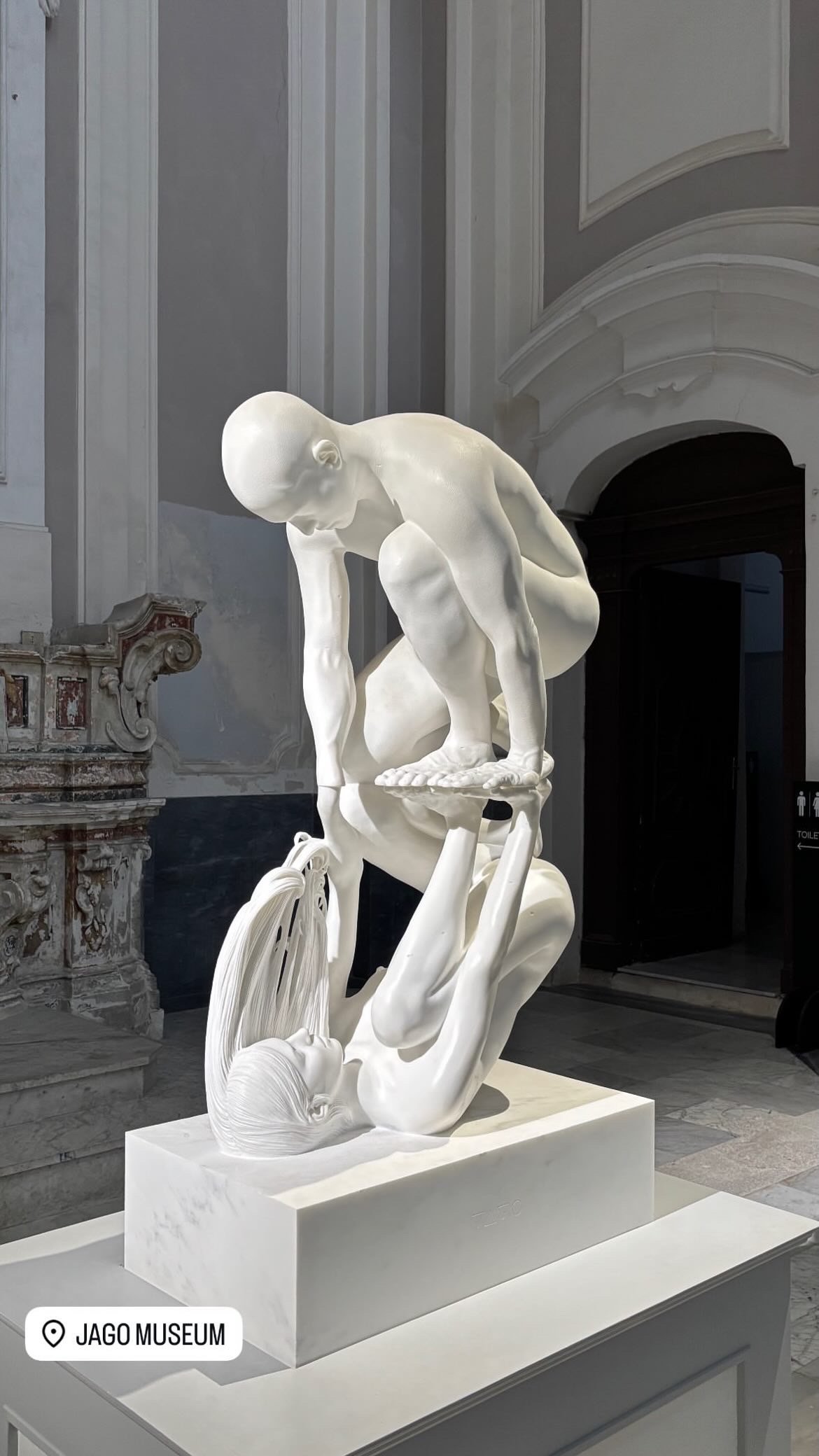
White marble figure by Jago under the arches of the Jago Museum church

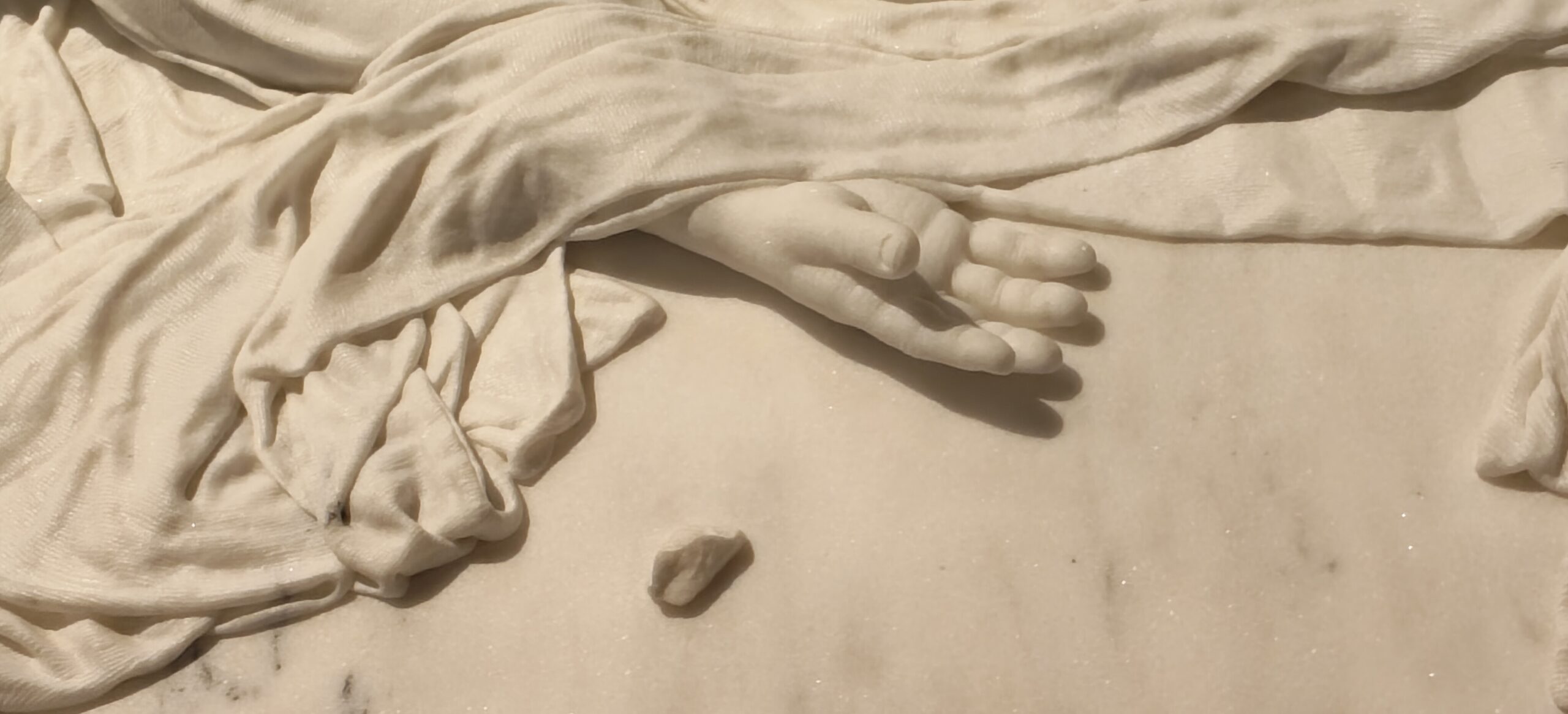
Jago models in clay and carves in marble, including Danby marble from Vermont, and he does it in public. From the first block to the last polish, his followers watch the work being made, in time-lapses, live sessions and short clips, which is why a sculptor with almost no gallery career had close to 800,000 Instagram followers by 2022. Critics argue about whether this is marketing or a new way of making art public; the queues outside his exhibitions suggest the audience does not mind.

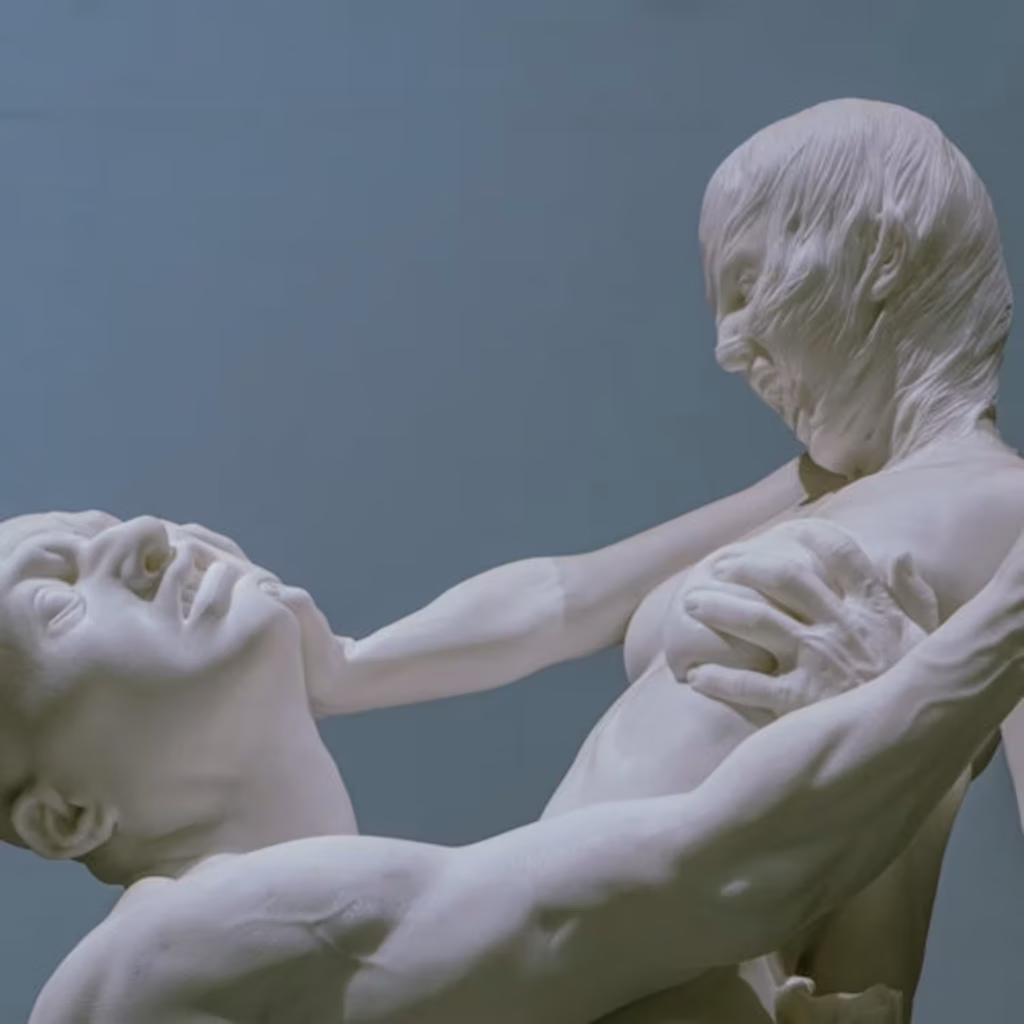
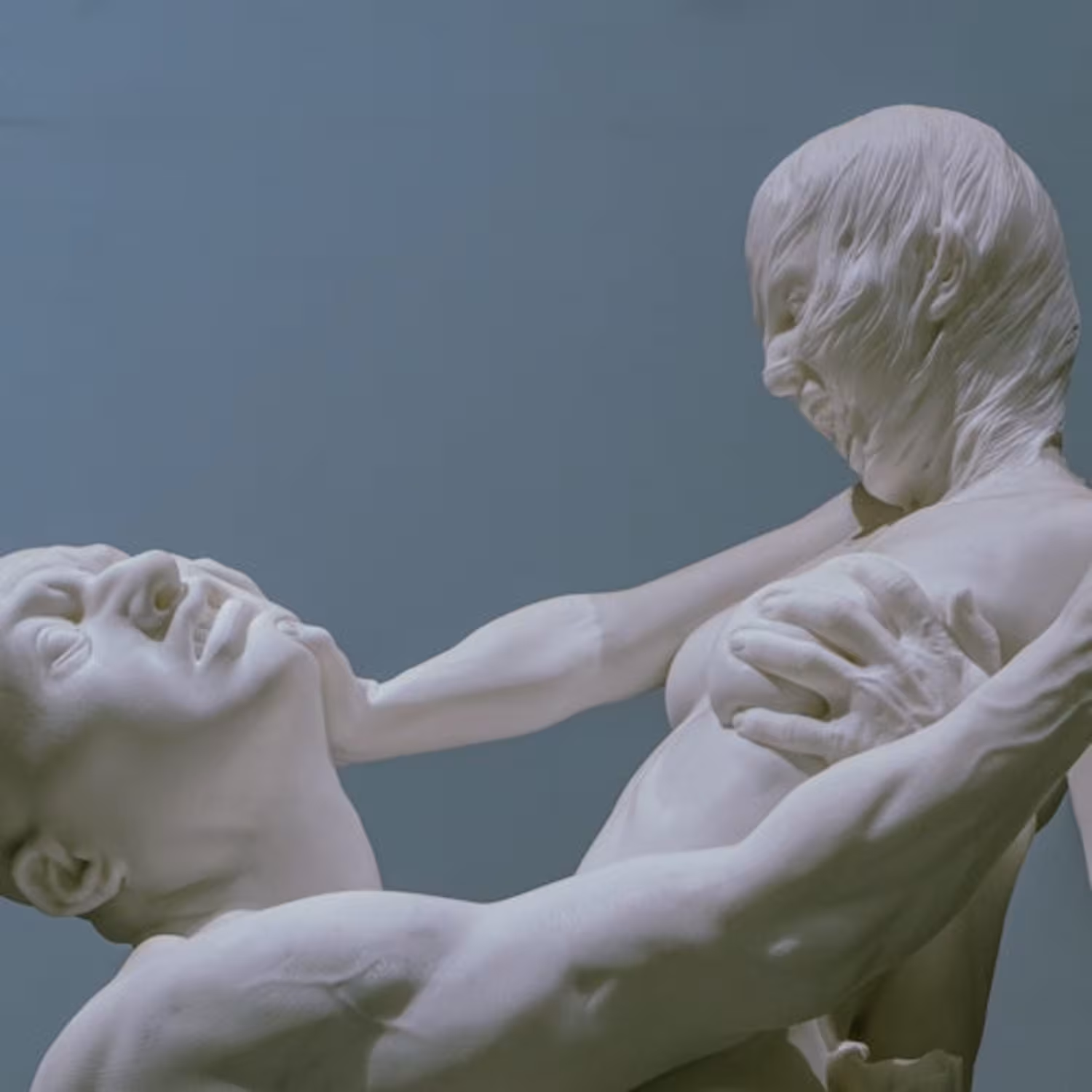
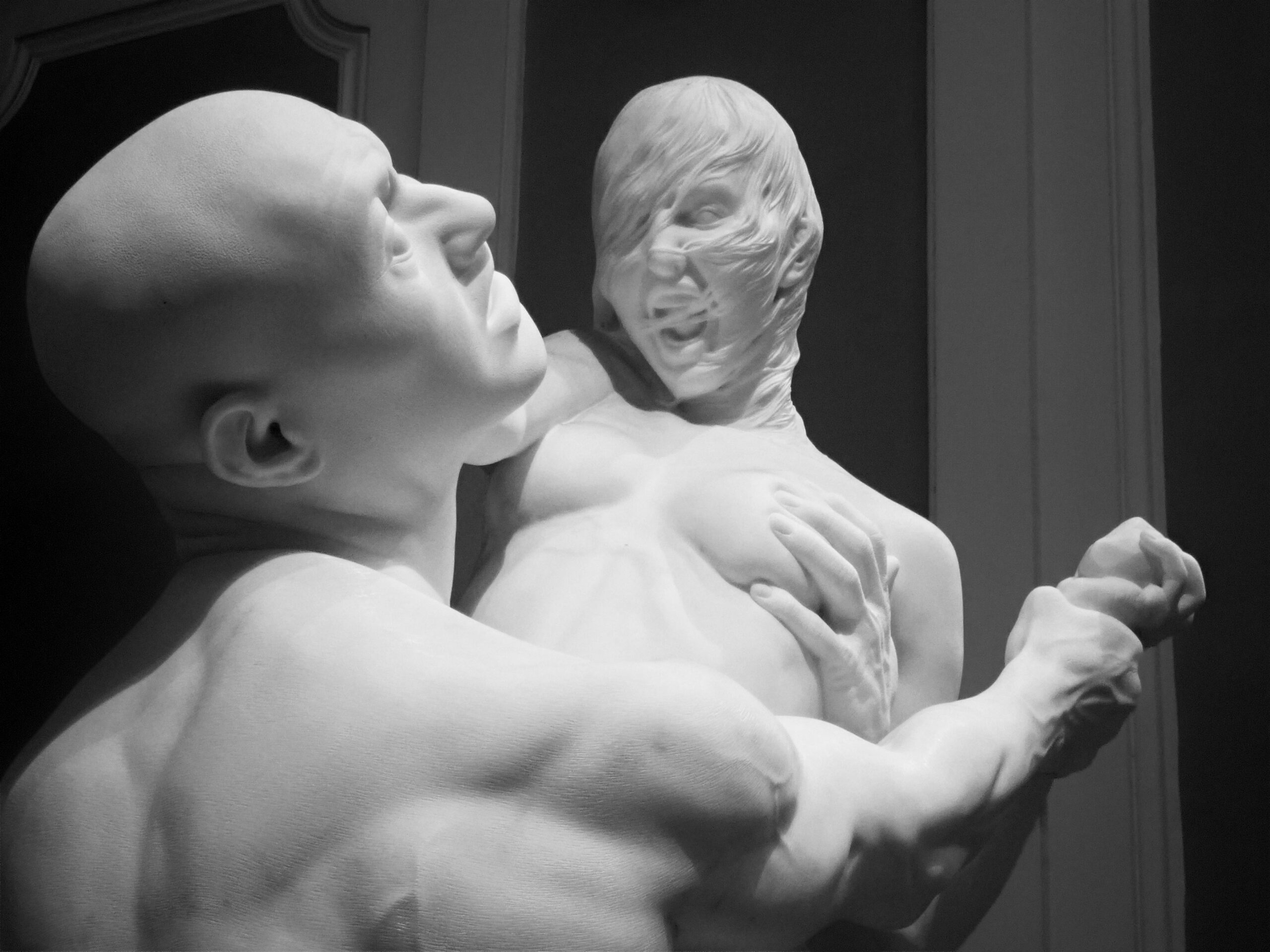
The faces are the thing to look for. He is not after the serene idealised features of the Renaissance models he openly borrows from. For the Pietà he spoke of wanting a true study of expression, emotion through the deformation of the face: the dead body is sexless and smooth, the mourning figure above it is Jago himself, and the grief is not tidied up into contemplation.

That Pietà was carved over 16 months inside the church of Sant'Aspreno ai Crociferi, a building of 1633 rebuilt a century later after flood damage by Bartolomeo and Luca Vecchione, collaborators of Vanvitelli, and long closed when Jago moved in. The church had been reopened through the work of Father Antonio Loffredo and the Sanità cooperatives; the studio became a museum on 20 May 2023, and the artist has since moved his workshop elsewhere, so what you see is the room his best-known works came out of, with the works back in it.

4.8
(68)

Jago Museum: Entrance Ticket + Guided Tour

Highlights

Explore intricate sculptures at the Jago Museum.

Benefit from the expert commentary of a live guide.

Discover the artistic techniques behind the exhibited works.

Enjoy a concise 25-minute tour available in English and Italian.

Small group tours limited to 30 participants ensure a personalized experience.
See the Studio, Then Walk to the Veiled Son

Jago's work is built to be seen close up and from every side, and the church makes that possible in a way a white-walled gallery would not. Our Jago Museum: Entrance Ticket + Guided Tour gives you a reserved slot in Sant'Aspreno ai Crociferi with a guide who explains each piece and the story of the building, and the same ticket covers the Veiled Son in the Cappella dei Bianchi, ten minutes on foot through Rione Sanità. The museum must be visited first; hours differ between the two sites and change seasonally, so check before you go.

About this guide

Sources: Jago.art, Biography and Jago Museum Naples; L'Osservatore Romano, A modern Pietà (December 2021); Ciao Magazine, Jago: sculpture beyond borders; Visit Naples, The Jago Museum in Naples; The National, How a sculpture of an infant turned up in the Fujairah mountains.

Frequently Asked Questions About Jago the Sculptor

Who is Jago the sculptor?

Jago is the working name of Jacopo Cardillo, an Italian sculptor born in Frosinone in 1987. He works mainly in marble and became known by filming and sharing every stage of his sculptures.

What is Jago's most famous sculpture?

Three compete: Habemus Hominem, the undressed bust of Benedict XVI; the Veiled Son in Naples; and the Pietà of 2021. The Veiled Son is the one most visitors come to Naples for.

Why did Jago undress the Pope?

He carved the bust of Benedict XVI in 2009, before the abdication. When the Pope stepped down, Jago removed the robes to show the man beneath and renamed the work Habemus Hominem in 2016.

Where is the Jago Museum?

In the church of Sant'Aspreno ai Crociferi in Borgo dei Vergini, Rione Sanità, Naples. It opened on 20 May 2023 in the space that had been Jago's studio.

Is the Veiled Son in the Jago Museum?

No. It is a ten-minute walk away in the Cappella dei Bianchi at San Severo fuori le mura. The museum ticket includes it, but the museum has to be visited first.

Did Jago really send a sculpture into space?

Yes. First Baby went to the International Space Station in 2019 on the European Space Agency's Beyond mission and returned to Earth with astronaut Luca Parmitano in February 2020.

Where is Look Down now?

After six months in Piazza del Plebiscito from November 2020, Jago moved it to the Al Haniyah desert in Fujairah, in the United Arab Emirates, where it is called Look Here and the chain has been removed.

How many followers does Jago have?

By November 2022 he had almost 800,000 followers on Instagram, far more than any other living Italian sculptor, which is why he is often described as the artist of social networks.