We are processing your request.
Please, don’t close or refresh the page.
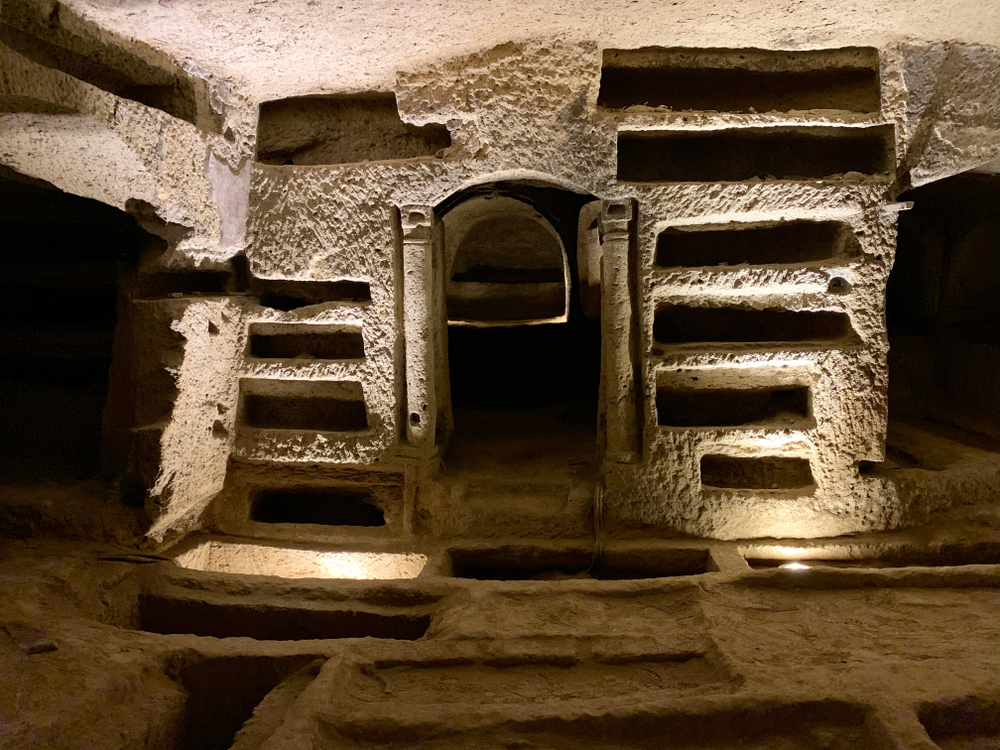
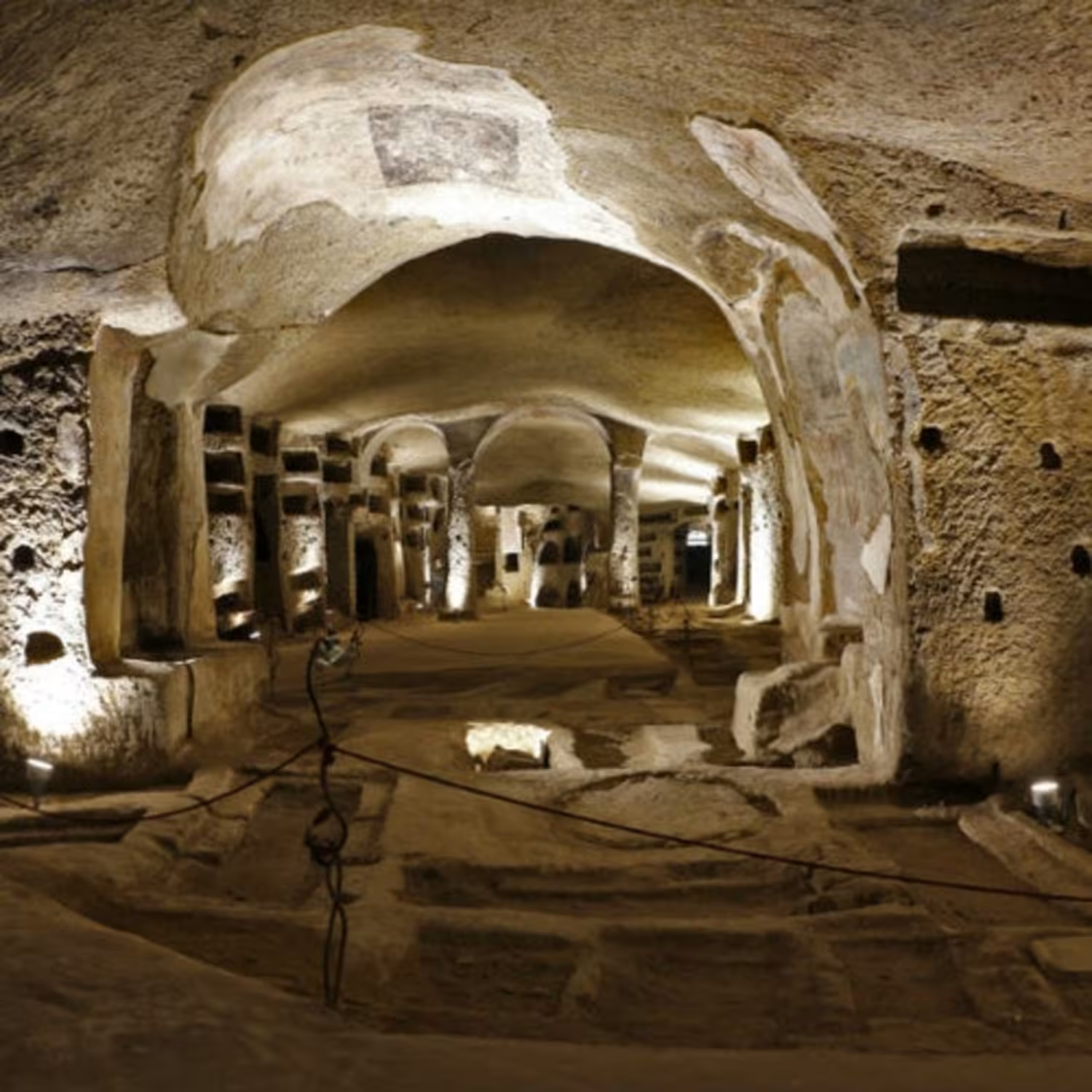
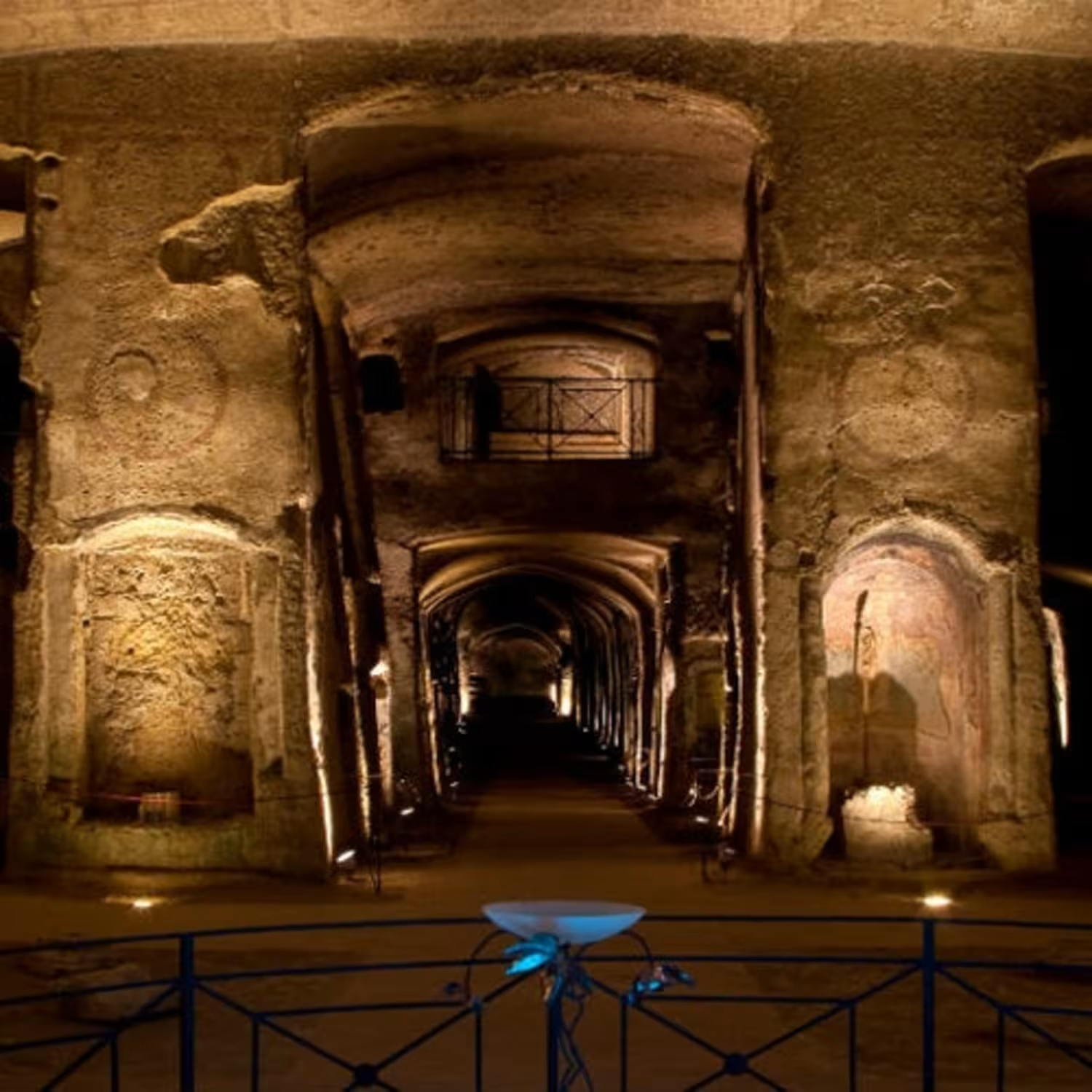
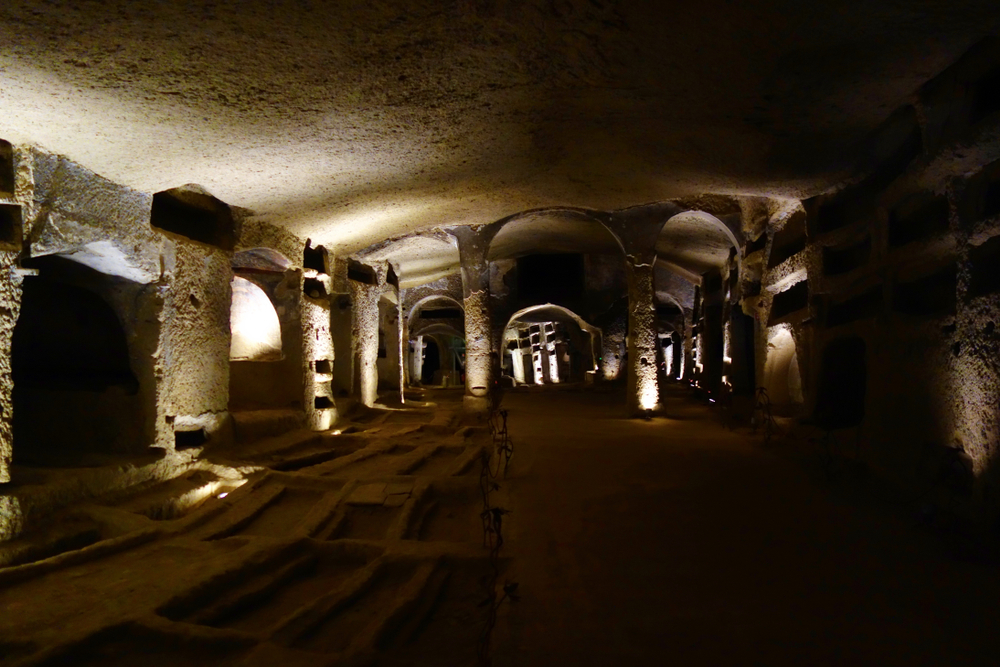
Pillared underground gallery of the Catacombs of San Gennaro, cut into the tuff around the tomb of Saint Januarius

Saint Januarius: the Martyr Whose Tomb Made the Catacombs of San Gennaro

Beheaded near Pozzuoli in 305 and carried to this hillside a century later, San Gennaro turned a family tomb into the largest early Christian cemetery in southern Italy. This is who he was, how he got here, and what is left of his presence underground.

What Makes Saint Januarius the Key to This Place

He was bishop of Benevento, not of Naples, though tradition says he was born in the city that now keeps his bones.

He was beheaded with six companions, among them the deacons Sossius, Festus and Proculus, near the Forum Vulcani, today's Solfatara.

His body lay first in the Agro Marciano near Pozzuoli. Bishop John I brought it to Naples in the early 5th century and buried it here.

The catacomb was already two centuries old when he arrived: its nucleus is a 2nd-century tomb of a noble family, later opened to Christians.

His presence changed the site's name and its shape. Pilgrims wanted to be buried near him, and a new basilica and the Crypt of the Bishops were cut above his cubiculum.

The tomb itself was only identified in 1973, by matching a medieval homily and a bishops' chronicle to a chamber beneath the bishops' basilica.

The bones left in 831, taken to Benevento by the Lombard prince Sico, and only came back to Naples in 1497. They now rest in the Cathedral.

Naples made him its patron in 472, after a Vesuvius eruption, and his feast falls on 19 September, the anniversary of his death. Pope Sixtus V formally canonised him in 1586.

A Bishop From Benevento, Arrested in Pozzuoli
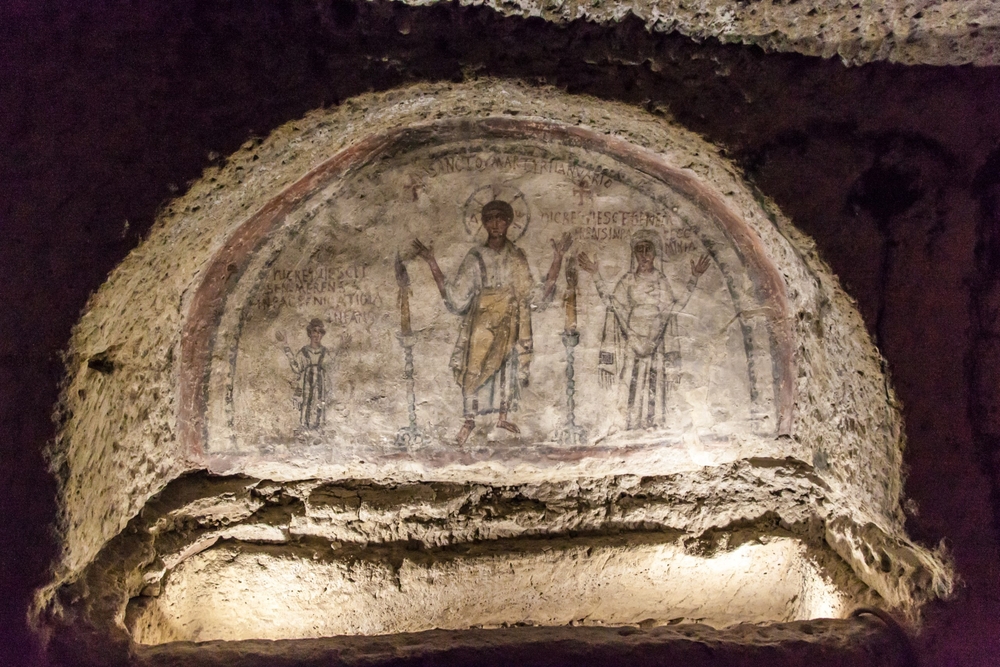
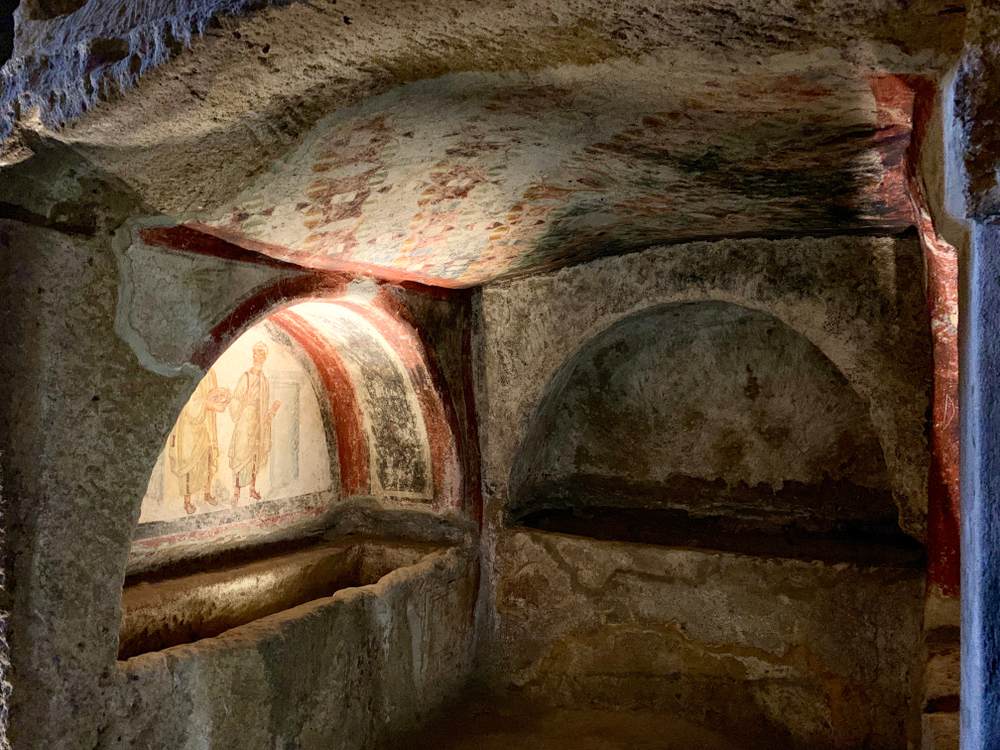
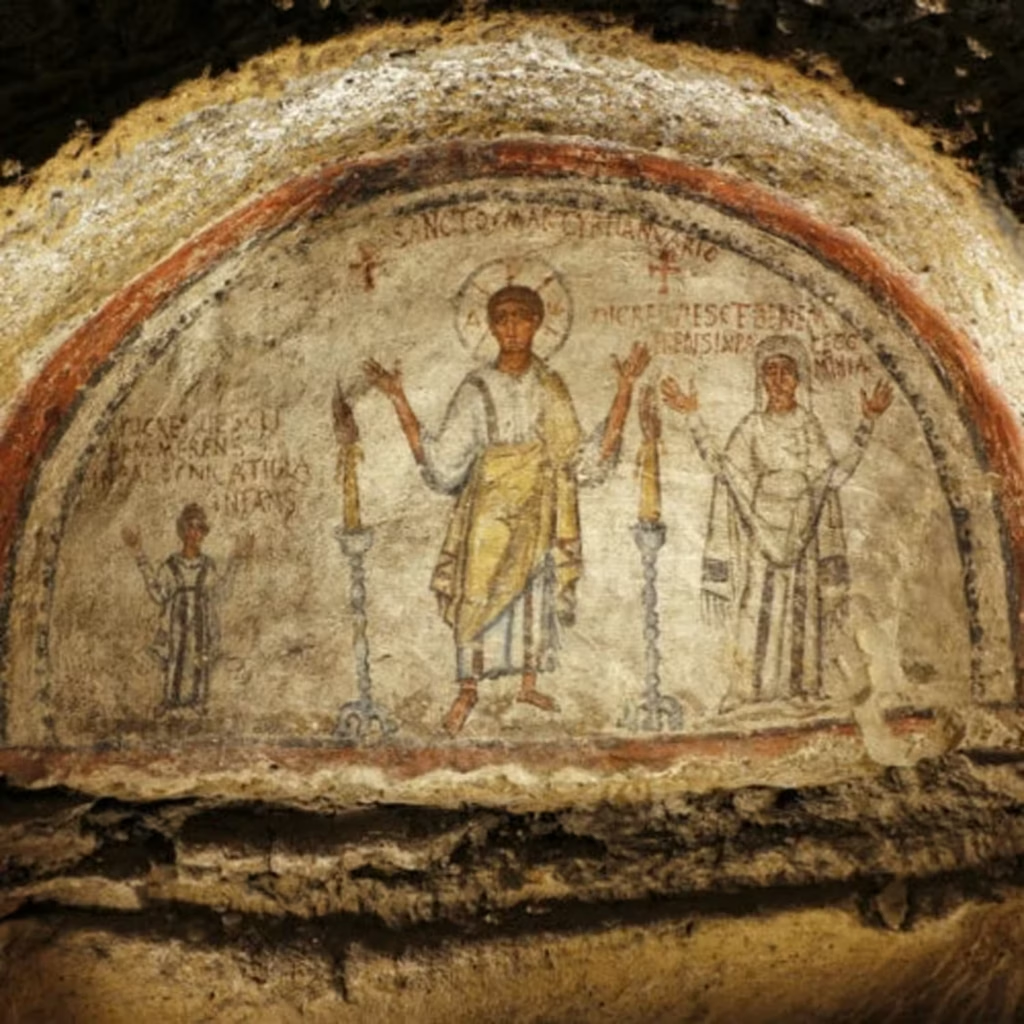
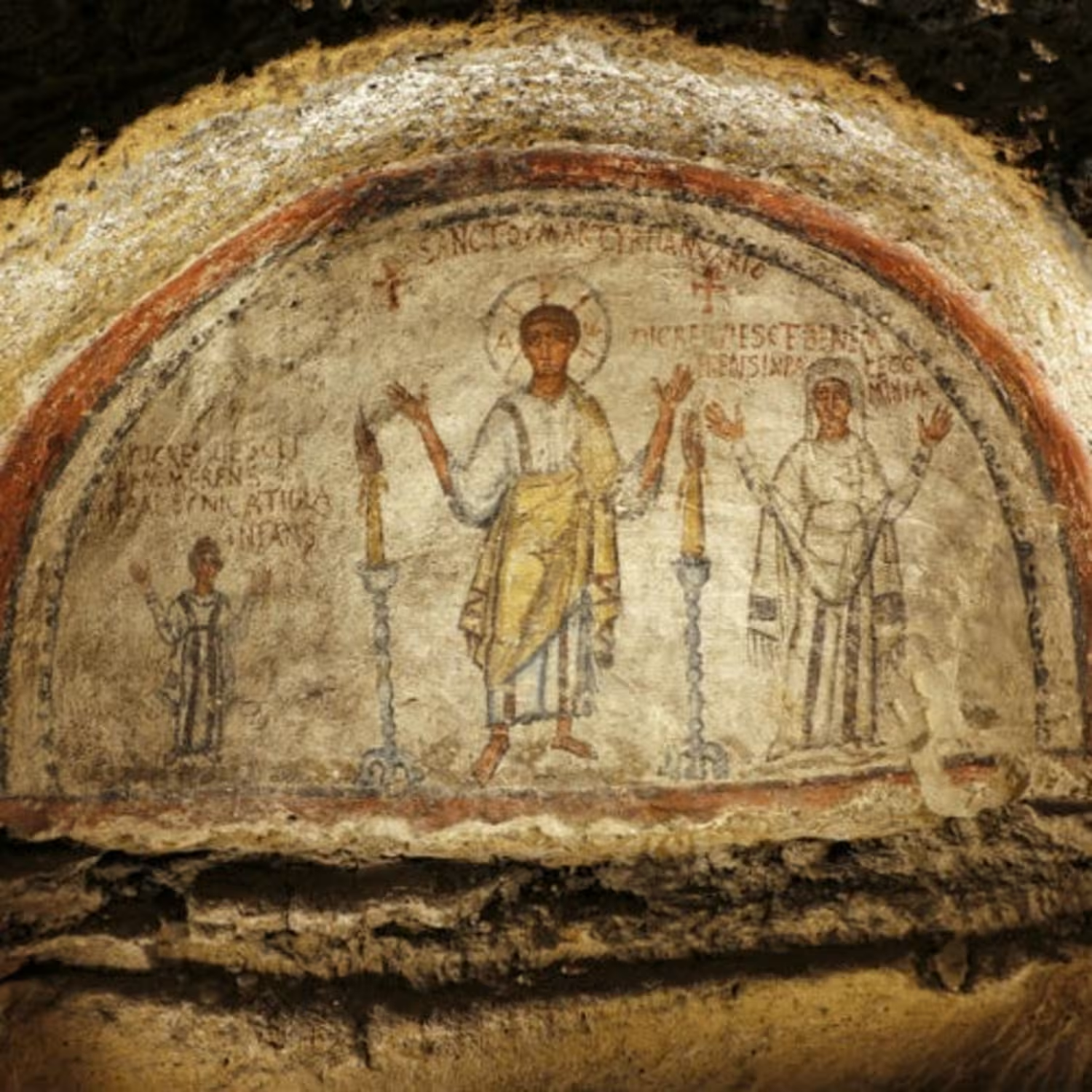
Early Christian fresco in a lunette at the Catacombs of San Gennaro, painted near the tomb of Saint Januarius

Almost everything we know about Januarius comes from accounts written long after his death, and the Catholic Encyclopedia is blunt about their reliability. The outline, though, is stable. He was bishop of Benevento, a town inland from Naples, and lived at the end of the 3rd century, when the emperor Diocletian launched the last and harshest persecution of Christians in the Roman Empire.

The story told in Naples is that he travelled to Pozzuoli with his deacon Festus and the lector Desiderius to visit the Christians there, and learned that his friend Sossius, deacon of Misenum, had been arrested. He went to see him in prison, defended him, and was arrested in turn. Later legend added a furnace he walked out of and wild beasts that refused to touch him; the governor, named Timotheus in the Breviary, put it down to magic and ordered beheadings.

The sentence was carried out on 19 September 305, near the Forum Vulcani, the steaming volcanic crater outside Pozzuoli now called the Solfatara. Seven men died: Januarius, Festus, Desiderius, Sossius, Proculus of Pozzuoli, Eutyches and Acutius. Tradition says a woman named Eusebia collected some of the bishop's blood in two small flasks. That detail, impossible to verify, is the seed of everything the name San Gennaro means in Naples today.

The Journey to Capodimonte, and How a Cemetery Grew Around Him
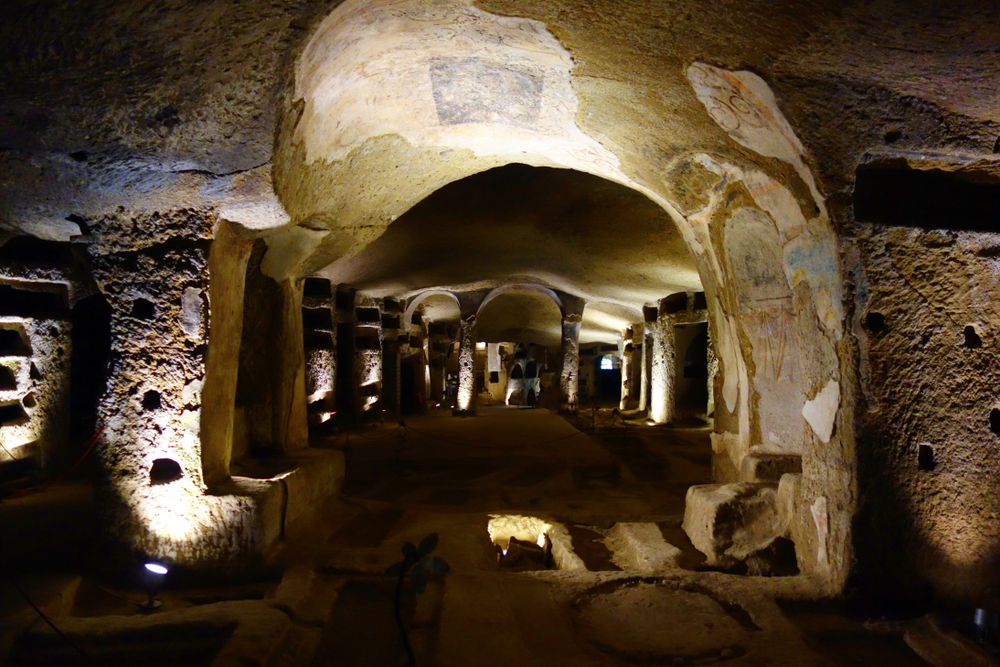
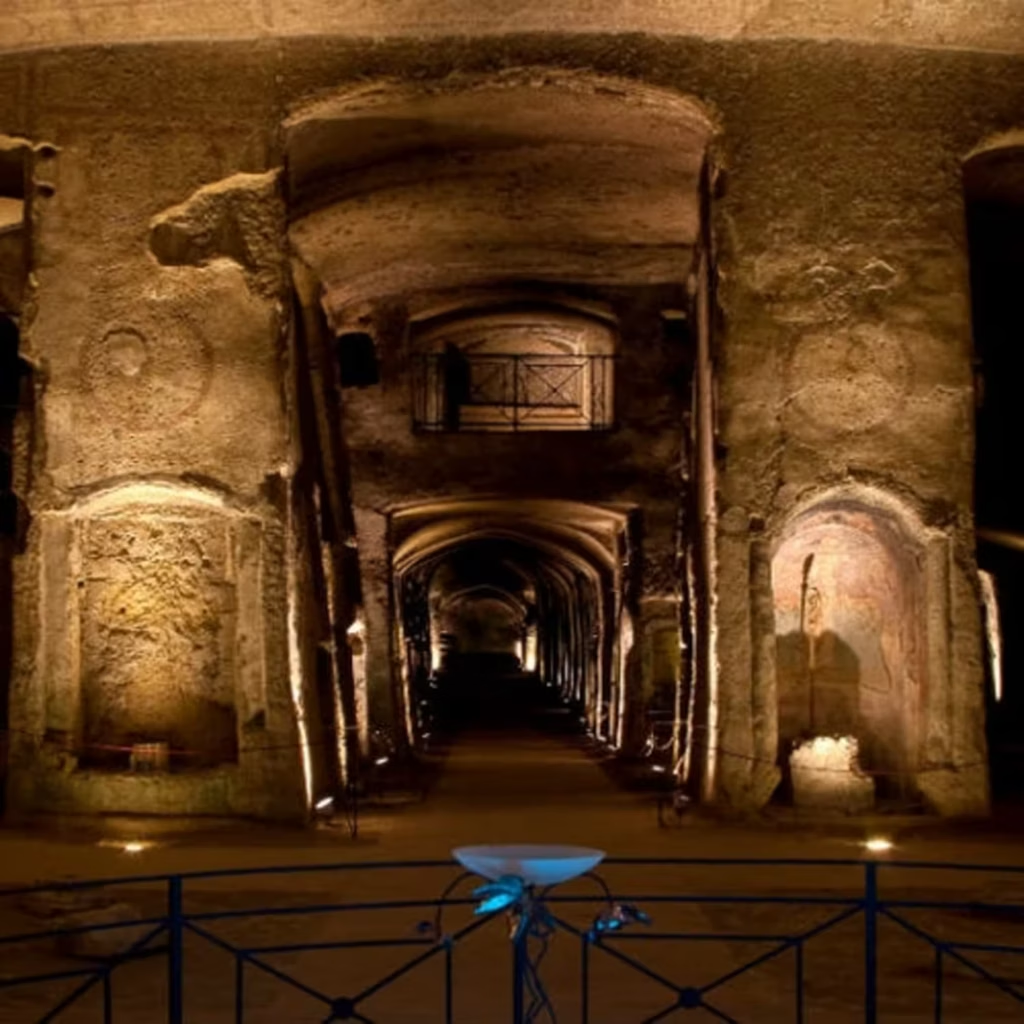
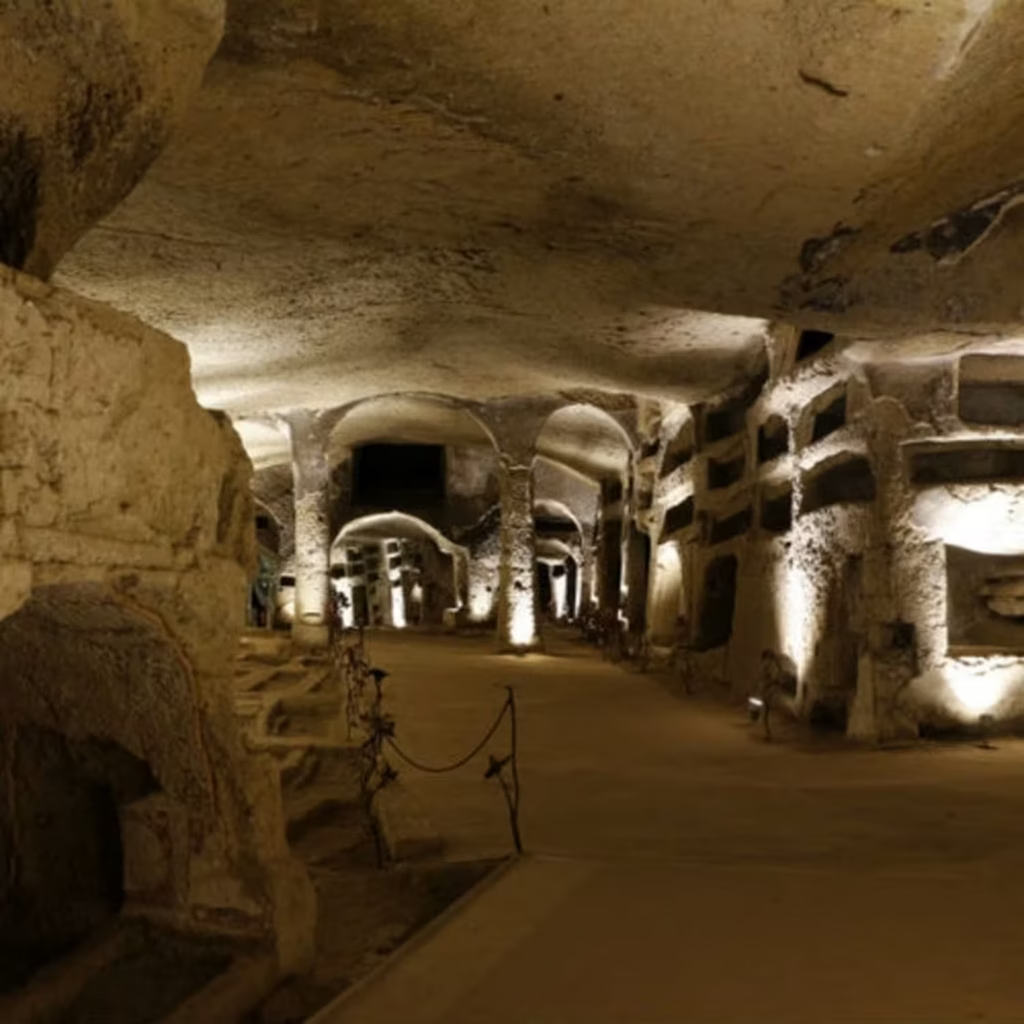
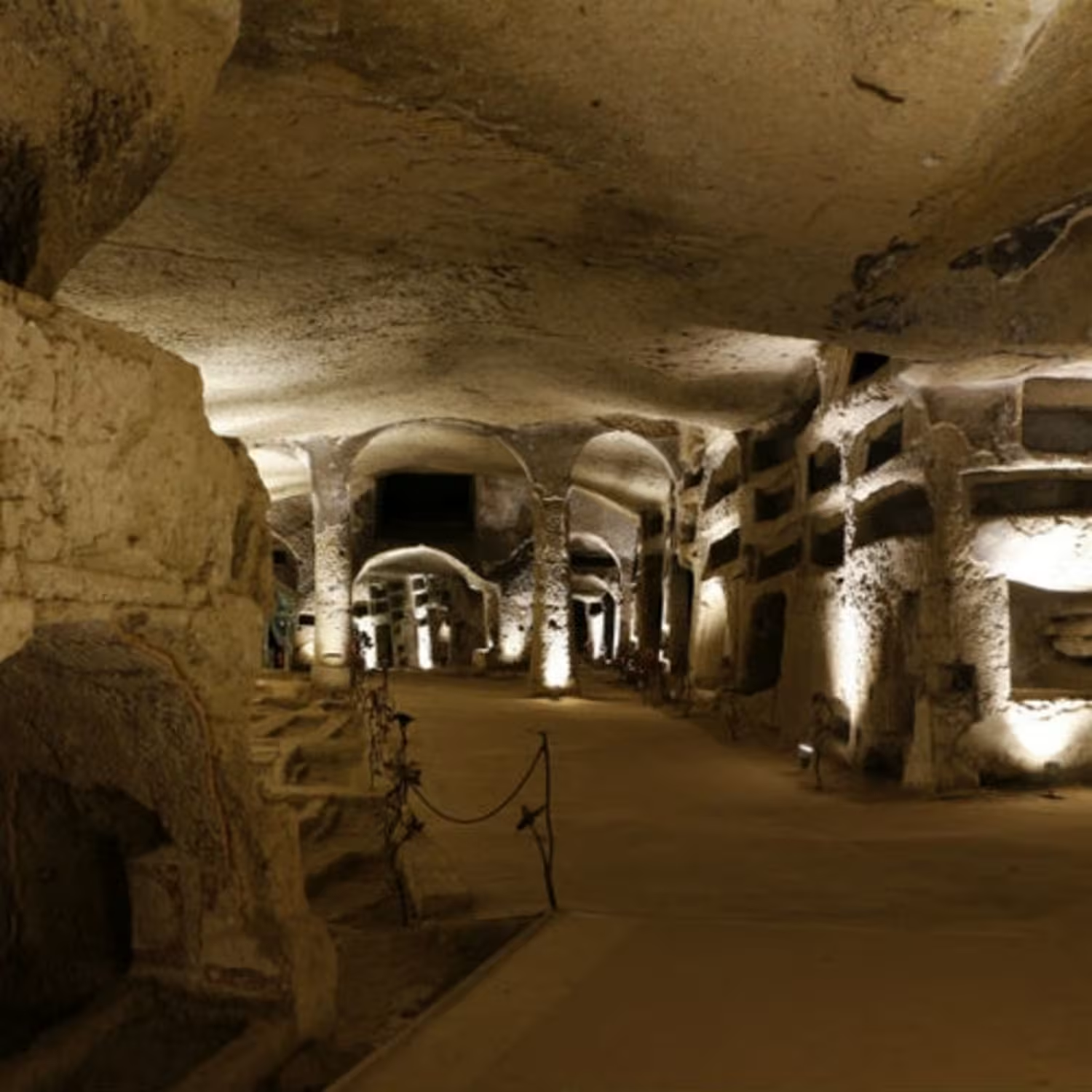
Lit tufa gallery in the Catacombs of San Gennaro, enlarged after the relics of Saint Januarius arrived in the 5th century

For about a century the body stayed near Pozzuoli, in a place the sources call the Agro Marciano. Then, in the early 5th century, Bishop John I of Naples had it moved to the cemetery on the Capodimonte hillside, outside the walls as Roman law required for any burial. Two chapels on the route, at Vomero and Antignano, are said to mark where the procession rested.

The cemetery was not new. Its oldest part is a 2nd-century family tomb cut into the yellow tuff, enlarged in the 3rd century with a vestibule painted in Pompeian style that holds some of the earliest Christian paintings in southern Italy. In the 4th century it gained its first saint, Agrippinus, an early bishop of Naples, whose underground basilica still has its altar and stone chair. Januarius was a far bigger draw.

What followed is written in the rock. The site took his name. Christians asked to be buried as close to him as possible, and the upper level expanded above his cubiculum with a three-nave basilica, known as the basilica adiecta, and a crypt where the bishops of Naples were laid in mosaic-decorated tombs. The soft tuff, which hardens when it meets the air, allowed halls far taller and wider than anything in the Roman catacombs, which is why the galleries here feel like architecture rather than tunnels. Around 3,000 burials have been counted so far, and not every gallery has been excavated.

4.7
(55)

Guided tour of the catacombs of San Gennaro

Highlights

Discover the ancient catacombs beneath Naples.

Learn about the city’s patron saint and other notable figures.

See beautifully restored frescoes and towering vaulted ceilings.

Experience the rich history of Italian sacred burial sites.

Enjoy insights from a knowledgeable live guide in English and Italian.
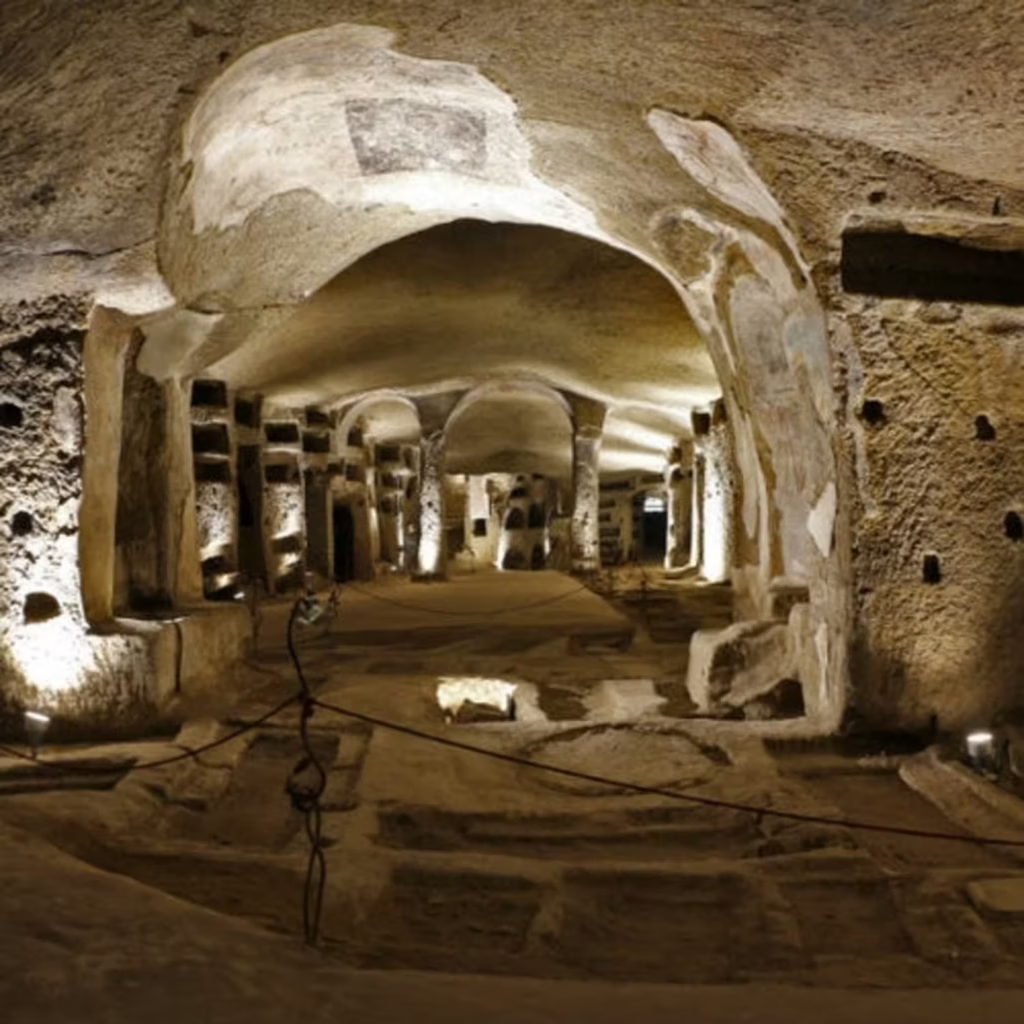
Stand Where the Pilgrims Stood

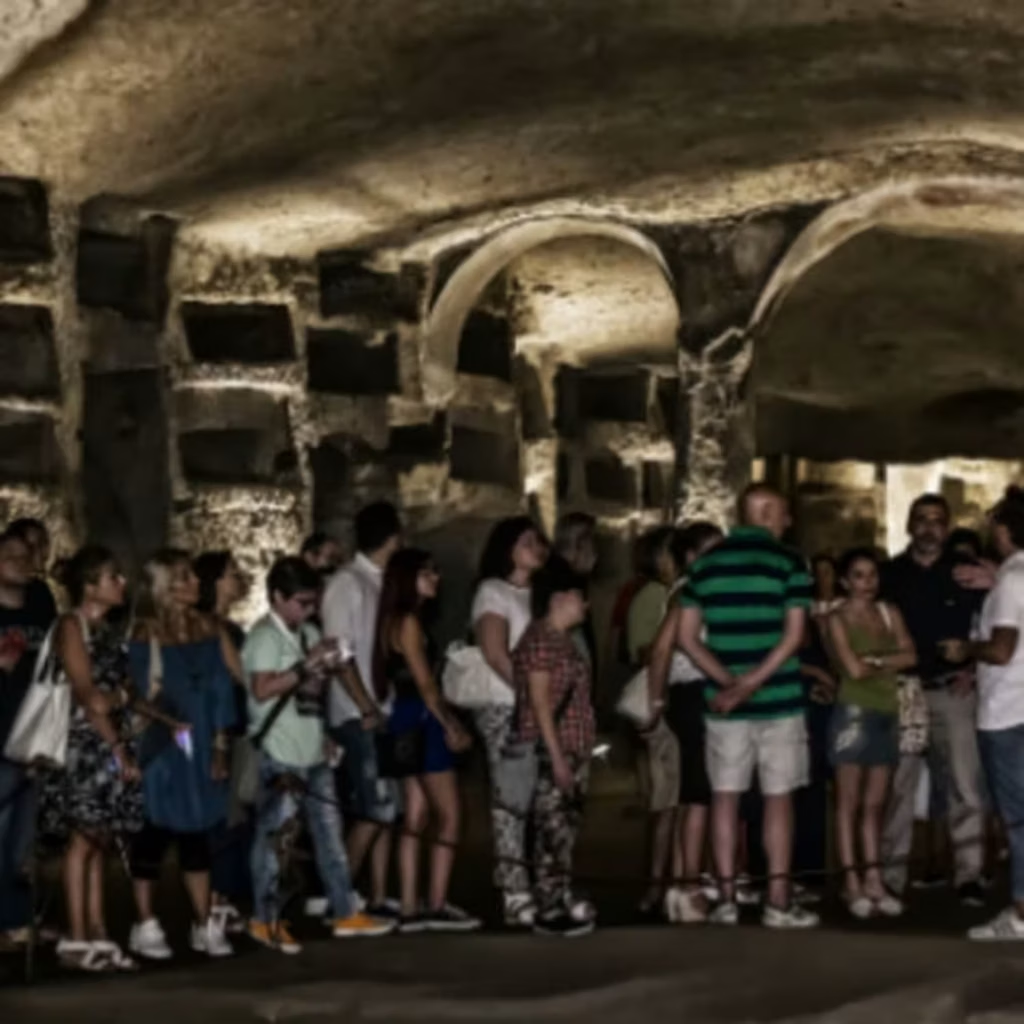
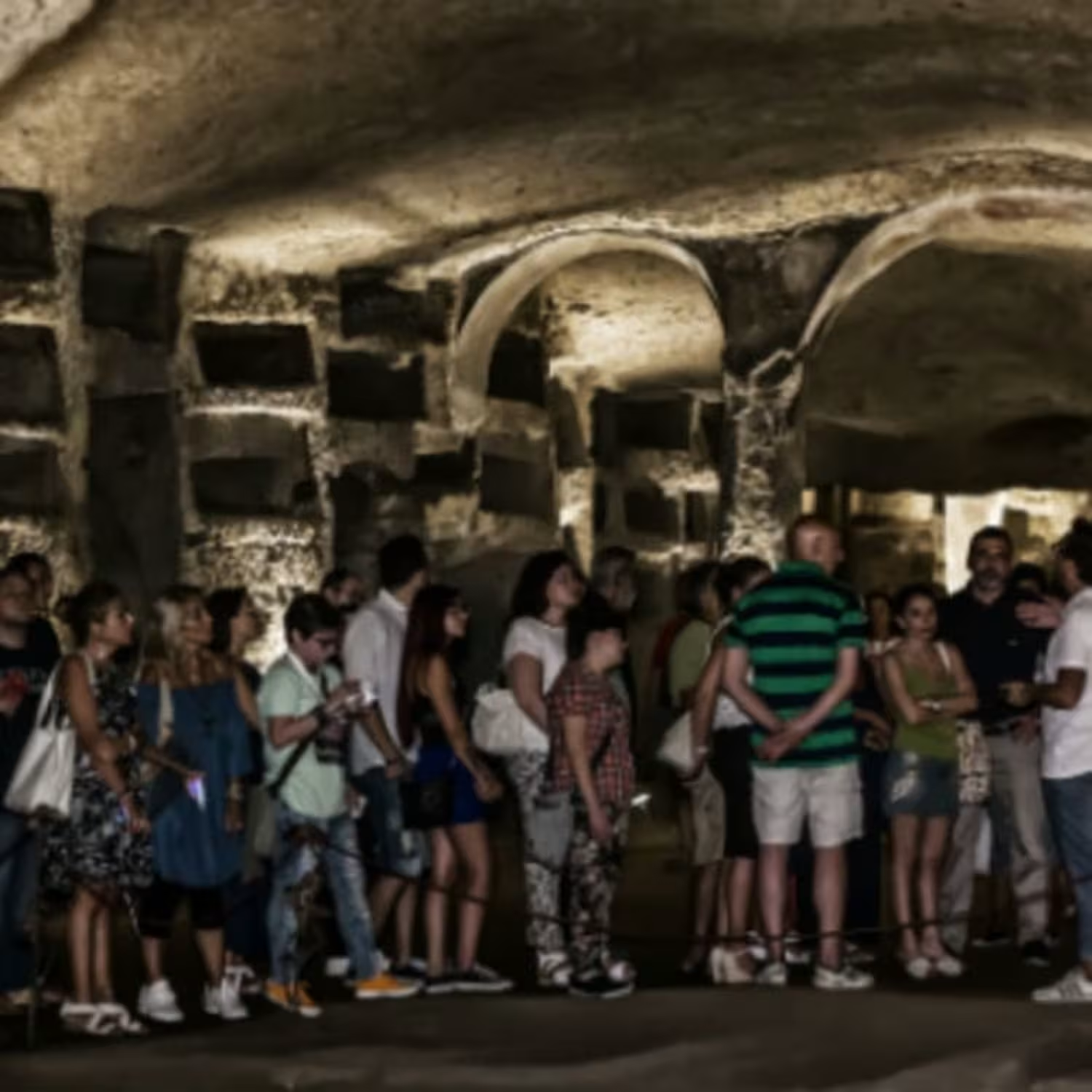
The Guided Tour of the Catacombs of San Gennaro takes you through both levels in about an hour, with the guide pointing out the basilica adiecta, the mosaic tombs of the bishops and the vestibule that looks down on the chamber identified as the saint's. It is dim and cool underground, and there is nowhere to sit, so wear something comfortable. The catacombs close on Wednesdays, so check before you go for the day and the language of your time slot. Come in the morning if you can, and leave time afterwards for the Rione Sanità streets outside, which grew up along the old pilgrim route to his tomb.

About this guide

Sources: Britannica, Saint Januarius; Catholic Encyclopedia, St. Januarius; Vatican City State, Saint of the day: Saint Januarius, bishop of Benevento and martyr; Google Arts and Culture, An invaluable heritage: the Catacombs of San Gennaro; Historic Mysteries, Catacombs of San Gennaro.

Frequently Asked Questions About Saint Januarius

Who was Saint Januarius?

Saint Januarius, San Gennaro in Italian, was a bishop of Benevento martyred around 305 during Diocletian's persecution. He is the patron saint of Naples and the saint whose blood is said to liquefy in the Cathedral three times a year.

How did Saint Januarius die?

He was beheaded near the Solfatara of Pozzuoli on 19 September 305, together with six companions, after visiting the imprisoned deacon Sossius. The later legends of a furnace and wild beasts come from the Breviary, not from any contemporary record.

Is Saint Januarius buried in the Catacombs of San Gennaro?

Not any longer. His body was brought here by Bishop John I in the early 5th century and the catacombs took his name, but the bones were taken to Benevento in 831. You can still see the chamber identified in 1973 as his original tomb.

Where are the relics of Saint Januarius today?

In Naples Cathedral. The bones came back from the sanctuary of Montevergine in 1497, and the two ampoules of blood are kept in the Royal Chapel of the Treasure inside the Cathedral.

When is the feast of Saint Januarius?

19 September, the anniversary of his martyrdom. It is one of the three dates each year when the ampoules are brought out, with the Saturday before the first Sunday of May and 16 December.

Why is Saint Januarius the patron saint of Naples?

Naples adopted him as patron in 472, after an eruption of Vesuvius, and has credited him with stopping later eruptions, including the one of 1631. Pope Sixtus V formally canonised him in 1586.

What did Saint Januarius do for the catacombs?

His arrival turned a family cemetery into a pilgrimage site. The upper level, the basilica adiecta and the Crypt of the Bishops were all built after his relics came, because Christians wanted to be buried near him.

Can you see the tomb of Saint Januarius on the tour?

Yes. The guided tour passes the upper vestibule that overlooks his cubiculum and the basilica built above it. Visits are guided only and last around an hour, so book a slot in your language.

This website offers official tickets for the venues listed, sold by Tourism Tickets. Please note, however, that it is not the official website of any of these venues.

The images and videos on this website may contain visual elements that have been created or enhanced using AI technology. They are provided for illustrative purposes only.